

Choosing the right DND armor might be the single biggest factor in whether your character survives a dungeon crawl or drops in the first round of combat. Armor Class determines how hard you are to hit, and in D&D 5e, every point of AC matters more than most new players realize.
This guide covers every type of DND armor available in the 5th Edition rules. Instead of copying the Player's Handbook word for word, it focuses on what each armor option actually means for your character at the table — the real AC numbers, the tradeoffs, and which classes should wear what.
What Is Armor Class in DND?
Armor Class (AC) is the number an attacker needs to meet or beat on their attack roll to hit you. The higher your AC, the harder you are to hit. Without any armor at all, your base AC is 10 + your Dexterity modifier.
That formula is the starting point for everything. When you put on DND armor, it replaces or modifies that base calculation. Some armor types let you add your full Dexterity bonus, others cap it, and heavy armor ignores Dexterity entirely.
As the video by How It's Played explains clearly, a common beginner mistake is thinking that armor proficiency adds to your AC. It does not. Proficiency only means you can wear the armor without suffering penalties to attack rolls, ability checks, saving throws, and spellcasting. The AC number on the armor is what you get regardless of proficiency.
DND Armor Table: Every Armor Type at a Glance
If you want the short version, here is the full DND 5e armor table with every option and its real AC value.
Light Armor
| Armor | AC | Stealth | Weight | Cost |
|---|---|---|---|---|
| Padded | 11 + Dex | Disadvantage | 8 lb | 5 gp |
| Leather | 11 + Dex | — | 10 lb | 10 gp |
| Studded Leather | 12 + Dex | — | 13 lb | 45 gp |
Medium Armor
| Armor | AC | Stealth | Weight | Cost |
|---|---|---|---|---|
| Hide | 12 + Dex (max 2) | — | 12 lb | 10 gp |
| Chain Shirt | 13 + Dex (max 2) | — | 20 lb | 50 gp |
| Scale Mail | 14 + Dex (max 2) | Disadvantage | 45 lb | 50 gp |
| Breastplate | 14 + Dex (max 2) | — | 20 lb | 400 gp |
| Half Plate | 15 + Dex (max 2) | Disadvantage | 40 lb | 750 gp |
Heavy Armor
| Armor | AC | Stealth | Str Req | Weight | Cost |
|---|---|---|---|---|---|
| Ring Mail | 14 | Disadvantage | — | 40 lb | 30 gp |
| Chain Mail | 16 | Disadvantage | Str 13 | 55 lb | 75 gp |
| Splint | 17 | Disadvantage | Str 15 | 60 lb | 200 gp |
| Plate | 18 | Disadvantage | Str 15 | 65 lb | 1,500 gp |
Shields
A shield adds +2 AC on top of whatever armor you are wearing. It costs 10 gp, weighs 6 lb, and requires one free hand. Any class proficient with shields can use one.
Light Armor in DND: Best for Dex-Based Characters
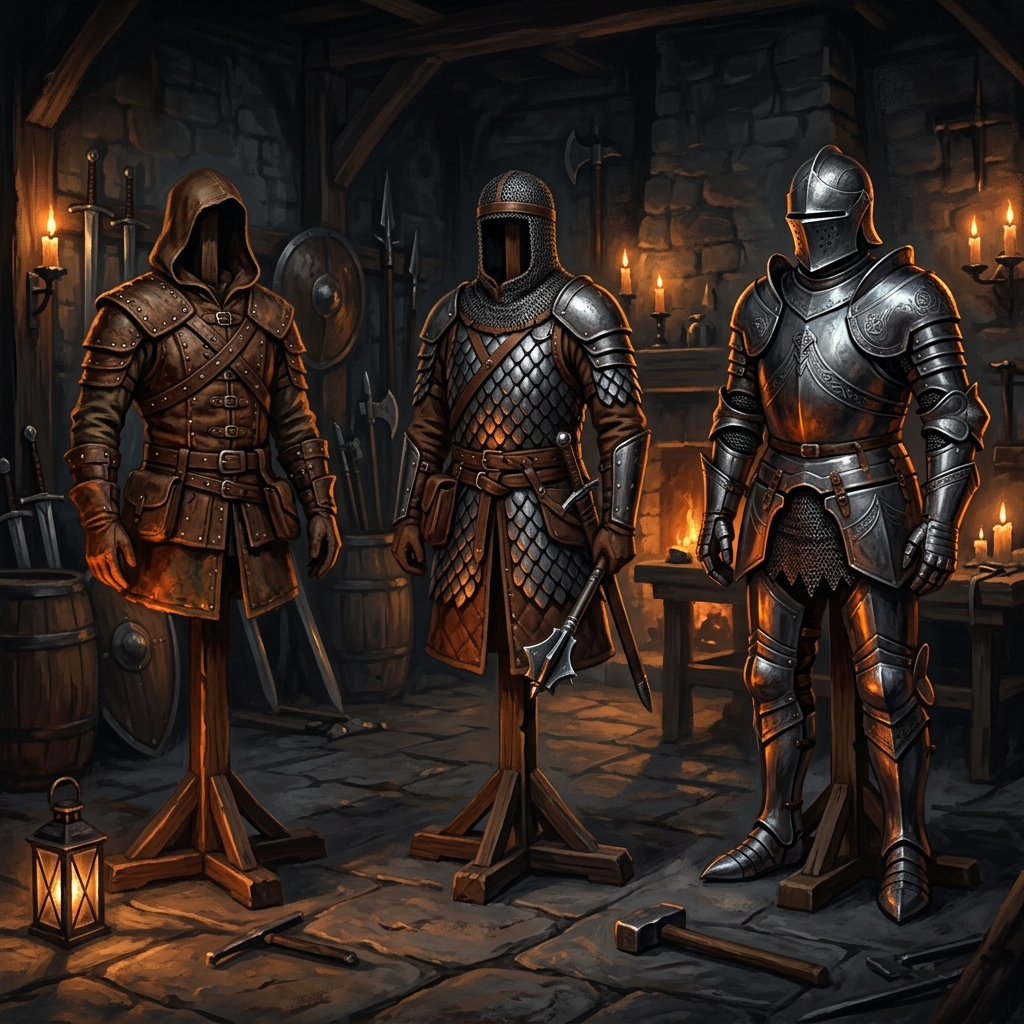
DND light armor is designed for characters who rely on Dexterity. You add your full Dex modifier to the base AC, which means a Rogue with 20 Dexterity wearing studded leather hits AC 17 with no shield — that is solid protection without any stealth penalty.
In my experience running and playing D&D for years, studded leather is the only light armor that matters long-term. Padded armor imposes stealth disadvantage for no extra benefit over regular leather, so it is essentially a trap option. Regular leather works fine at level 1 but gets replaced fast.
- Best for: Rogues, Rangers, Bards, Warlocks, Monks (though Monks usually prefer Unarmored Defense).
- Why it works: no stealth penalty on studded leather, full Dex bonus, and light enough to not slow you down.
- Max realistic AC: 17 (studded leather + 5 Dex) or 19 with a shield if your class allows it.
Medium Armor in DND: The Versatile Middle Ground
Medium armor caps your Dexterity bonus at +2, but it provides higher base AC than light options. If your Dex modifier is +2 or lower, medium armor almost always gives you better protection than light armor.
The standout choices here are breastplate and half plate. Breastplate gives you AC 16 (with +2 Dex) and no stealth disadvantage — that is the sweet spot for characters who need decent defense without being loud. Half plate pushes to AC 17 but comes with stealth disadvantage.
- Best for: Druids, Rangers, Clerics (some domains), Barbarians (when not using Unarmored Defense), and multiclass builds.
- Pro tip: breastplate is often overlooked because half plate has higher AC, but if stealth matters at all in your campaign, breastplate is the smarter buy.
- Max realistic AC: 17 (half plate + 2 Dex) or 19 with a shield.
Heavy Armor in DND: Maximum Protection, Zero Dexterity
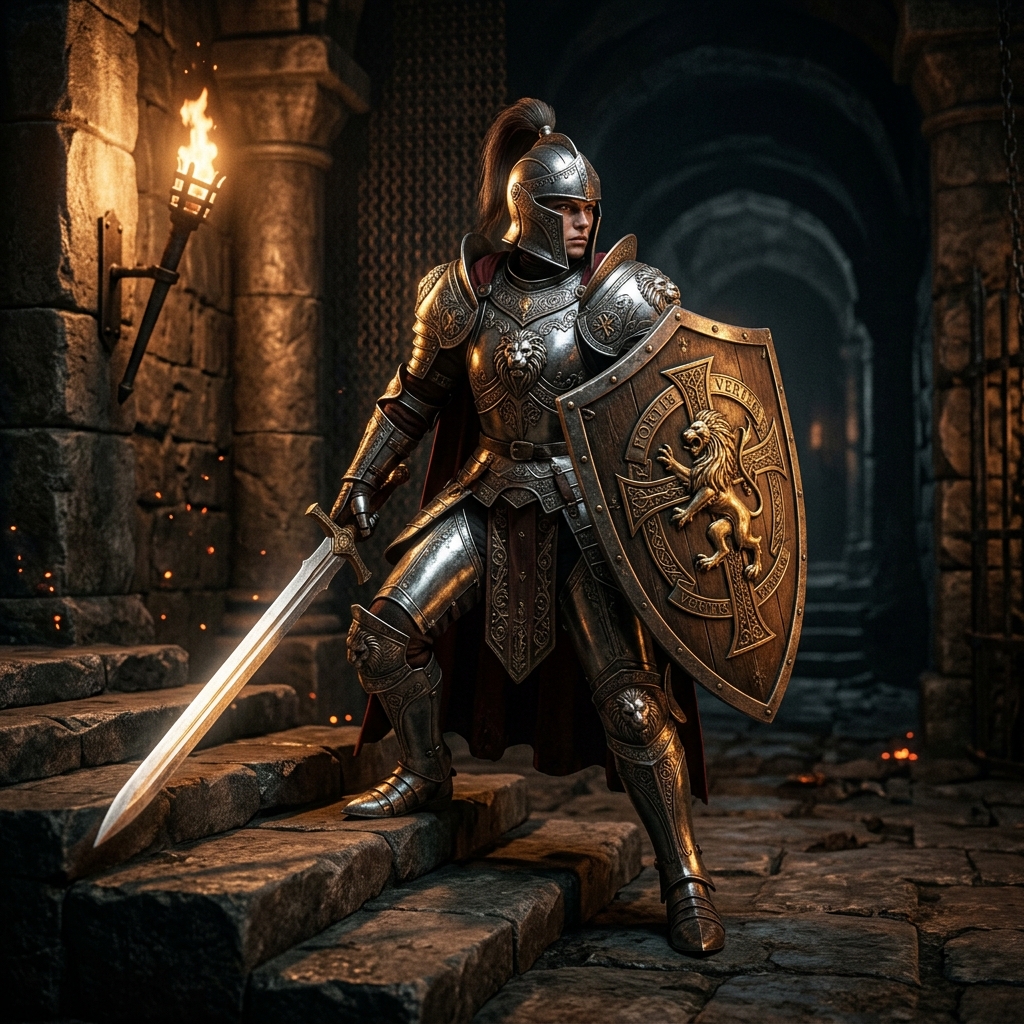
Heavy armor ignores your Dexterity modifier completely. Your AC is just the flat number listed. That makes heavy armor perfect for characters who dump Dex and invest everything into Strength, Constitution, and their primary spellcasting stat.
Plate armor at AC 18 is the highest base AC you can get from standard armor. Add a shield and you are sitting at AC 20 before any magic items or spells. That is a frontline tank who is genuinely hard to hit.
The catch? Every heavy armor option imposes stealth disadvantage, and chain mail and above require a minimum Strength score. If your Strength is below the requirement, your speed drops by 10 feet. Based on our table experience, forgetting about the Strength requirement is one of the most common new-player mistakes with DND armor.
- Best for: Fighters, Paladins, and heavy-armor Clerics (Life, War, Forge domains).
- Starting armor note: Fighters and Paladins typically start with chain mail (AC 16) at level 1. Plate armor at 1,500 gp is usually a mid-campaign purchase.
- Max realistic AC: 20 (plate + shield) or higher with magic items like +1 plate or Shield of Faith spell.
How to Calculate Armor Class in DND 5e
AC calculation confuses a lot of beginners because different armor types use different formulas. Here is the simple breakdown:
- No armor: 10 + Dex modifier.
- Light armor: armor base AC + full Dex modifier.
- Medium armor: armor base AC + Dex modifier (max +2).
- Heavy armor: armor base AC only. Dex does not apply.
One critical rule that the How It's Played video covers well: AC bonuses from different sources stack, but you cannot use two AC calculations at the same time. For example, you cannot wear armor and also use the Monk's Unarmored Defense — you pick one calculation. But you can add a shield bonus (+2) and a Ring of Protection (+1) on top of your chosen armor calculation.
Common AC bonus sources
- Shield: +2 AC.
- Shield spell (Wizard/Sorcerer): +5 AC as a reaction until next turn.
- Shield of Faith (Cleric/Paladin): +2 AC, concentration.
- Cover: half cover +2, three-quarters cover +5.
- Magic items: +1/+2/+3 armor, Ring of Protection, Cloak of Protection.
Which DND Armor Is Best for Each Class?
Choosing armor is not just about the highest AC number. It is about matching your defenses to your class abilities, your Dexterity score, and how your character actually plays. Here is what I recommend based on years of table time:
| Class | Best Armor | Notes |
|---|---|---|
| Fighter | Heavy + Shield | Chain mail at Lv1, upgrade to plate ASAP |
| Paladin | Heavy + Shield | Same as Fighter; aura abilities reward front-line play |
| Rogue | Studded Leather | Full Dex bonus, no stealth penalty — non-negotiable |
| Ranger | Studded Leather / Breastplate | Depends on Dex; Str-based rangers use medium |
| Barbarian | Unarmored Defense | 10 + Dex + Con; chain shirt or breastplate early on |
| Cleric | Heavy or Medium + Shield | Life / War / Forge = heavy; other domains = medium |
| Druid | Medium + Shield (non-metal) | Hide armor or non-metal breastplate; ask your DM |
| Wizard / Sorcerer | Mage Armor spell | AC 13 + Dex; Shield spell for emergencies |
| Bard | Studded Leather | Light armor only unless you multiclass |
| Warlock | Light (or Medium for Hexblade) | Hexblade gets medium + shield proficiency |
| Monk | No Armor | 10 + Dex + Wis; wearing armor disables Monk features |
Mage Armor: The Caster's Alternative to Physical Armor
Characters without armor proficiency are not defenseless. The Wizard spell Mage Armor sets your base AC to 13 + Dex modifier and lasts 8 hours without concentration. For a Wizard with 16 Dexterity, that is AC 16 — better than chain mail.
The tradeoff is that it uses a 1st-level spell slot every day. At low levels that hurts; at higher levels it becomes trivial. If you are playing a squishy caster, Mage Armor is essentially mandatory until you find magical alternatives.
Common DND Armor Mistakes to Avoid
After running dozens of campaigns, these are the armor mistakes I see most often:
- Thinking proficiency = AC bonus. It does not. Proficiency just means you avoid penalties.
- Ignoring Strength requirements on heavy armor. If your Fighter has 12 Strength and wears splint (Str 15 required), you lose 10 feet of movement. That matters.
- Stacking two AC calculations. You cannot use Mage Armor and then put on a chain shirt. Pick one base calculation.
- Forgetting stealth disadvantage. Half plate and all heavy armors impose disadvantage on Stealth. If your party relies on sneaking, this affects everyone, not just you.
- Sleeping in heavy armor. The optional rule in Xanathar's Guide says sleeping in medium or heavy armor means you only recover a quarter of your hit dice and no reduction in exhaustion. Many DMs enforce this.
FAQ About DND Armor
What is the best armor in DND 5e?
Plate armor (AC 18) is the best standard armor in DND 5e by raw AC value. Combined with a shield, it gives AC 20, which is the highest non-magical armor class available in the base rules.
Can you wear DND armor without proficiency?
Yes, you can physically put on any DND armor, but wearing armor you are not proficient with gives you disadvantage on all ability checks, saving throws, and attack rolls that use Strength or Dexterity, and you cannot cast spells. In practice, it makes the armor useless.
Does Dexterity affect heavy armor AC?
No. DND heavy armor uses a flat AC number that does not change with your Dexterity modifier. A Fighter with 8 Dex and a Fighter with 20 Dex have exactly the same AC in plate armor.
What is the difference between light and medium armor in DND?
DND light armor lets you add your full Dexterity modifier to AC, while medium armor caps the Dex bonus at +2. Light armor is better when your Dex is high (+3 or above); medium armor is better when your Dex is moderate (+2 or below).
Does a shield count as armor in DND?
A shield is listed in the armor table and requires armor proficiency (shield proficiency specifically), but it is not "armor" for the purpose of features that say "while not wearing armor." It simply adds +2 to your AC on top of your current armor or unarmored calculation.
Watch This Visual Breakdown of DND Armor and AC
If you want a clear visual walkthrough of how DND armor and Armor Class actually work in play, this video from How It's Played does an excellent job of explaining the mechanics step by step. It covers AC calculation, how different armor types apply Dexterity, and how bonus sources like shields and spells stack.