
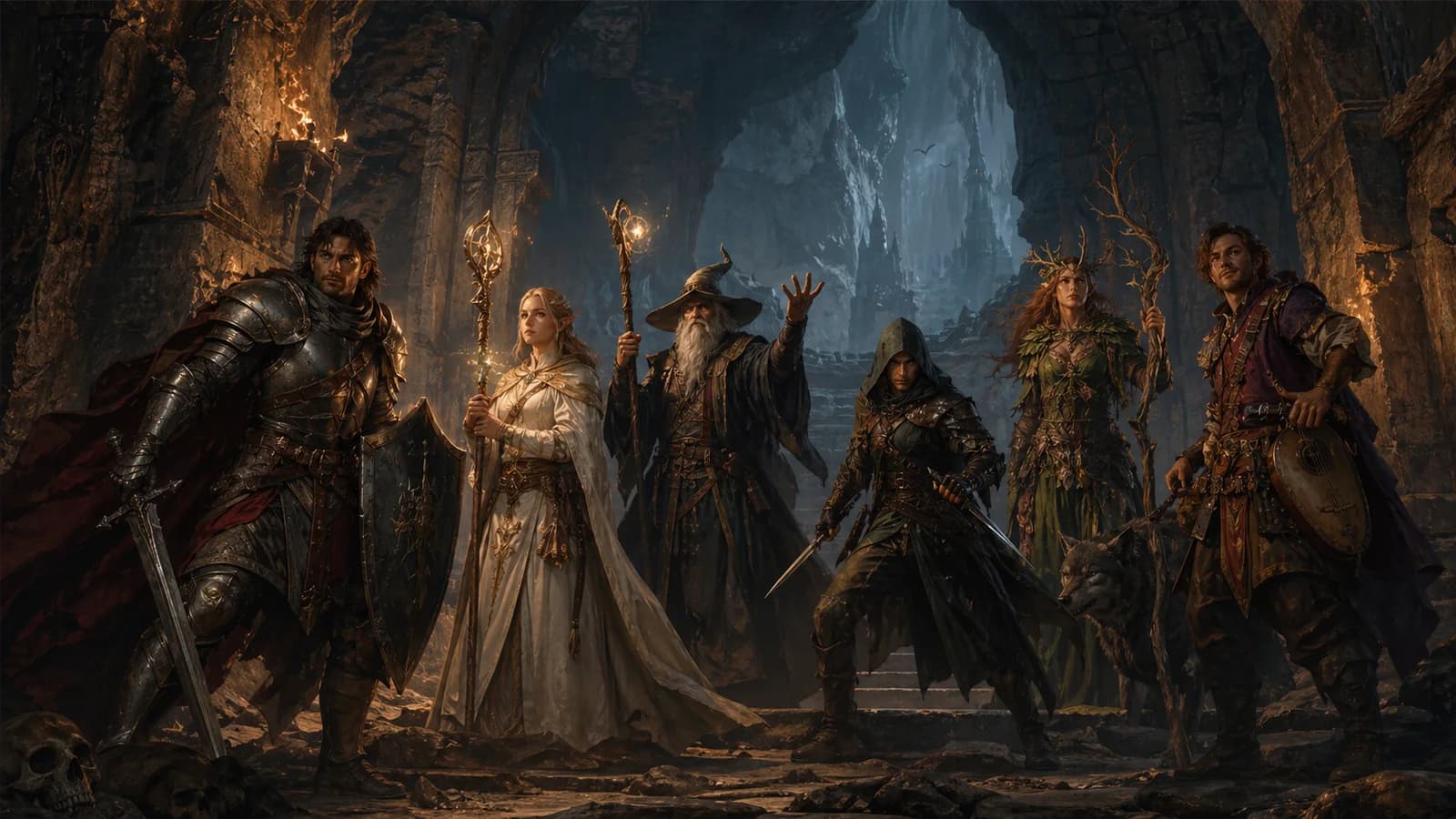
If you are new to tabletop RPGs, learning the major DND classes is one of the fastest ways to understand how Dungeons & Dragons actually feels at the table. Different class choices change your combat role, your decision-making speed, the kind of fantasy you bring to the party, and even how comfortable your first few sessions feel.
This guide breaks down the main DND classes in simple language. Instead of repeating rulebook text, it focuses on what the most popular options feel like in real play, which ones are easiest for new players, and how to match the right class to the fantasy you already have in mind.
What Are DND Classes?
In Dungeons & Dragons, your class defines the way your character interacts with the game. The reason new players spend so much time comparing DND classes is simple: your class shapes how you attack, how much magic you manage, how complex your turns feel, and what role you naturally fill inside a group.
In practical terms, DND classes are the core gameplay identities in D&D. A Barbarian solves problems very differently from a Wizard. A Rogue approaches danger differently from a Cleric. A Bard creates a different tone at the table than a Fighter. That is why choosing between class options matters so much for beginners.
- Combat identity: some classes want to stand in front, while others thrive from the back line.
- Magic load: some classes barely touch spells, while others depend on them every round.
- Learning curve: the easiest options ask for fewer decisions each turn.
- Roleplay flavor: different class choices support very different character fantasies.
Quick Comparison of DND Classes

If you want the short version before reading the full breakdown, the most beginner-friendly DND classes are usually Fighter, Barbarian, Rogue, and sometimes Paladin. These options are popular because they teach core D&D habits without forcing you to juggle the largest spell lists in the game.
- Barbarian: simple power, high durability, and very direct turns.
- Fighter: the safest all-around choice for learning combat rhythm.
- Rogue: excellent for players who like stealth, timing, and clever positioning.
- Paladin: strong melee presence with a little magic and a clear heroic identity.
- Wizard and Druid: rewarding, but usually harder for first-time players.
DND Classes Explained from a Player Perspective
Most lists of DND classes stop at mechanics. For beginners, that is usually not enough. The more useful question is what each option actually feels like once initiative starts, the party gets in trouble, and you need to make decisions under pressure.
Simple martial DND classes for beginners
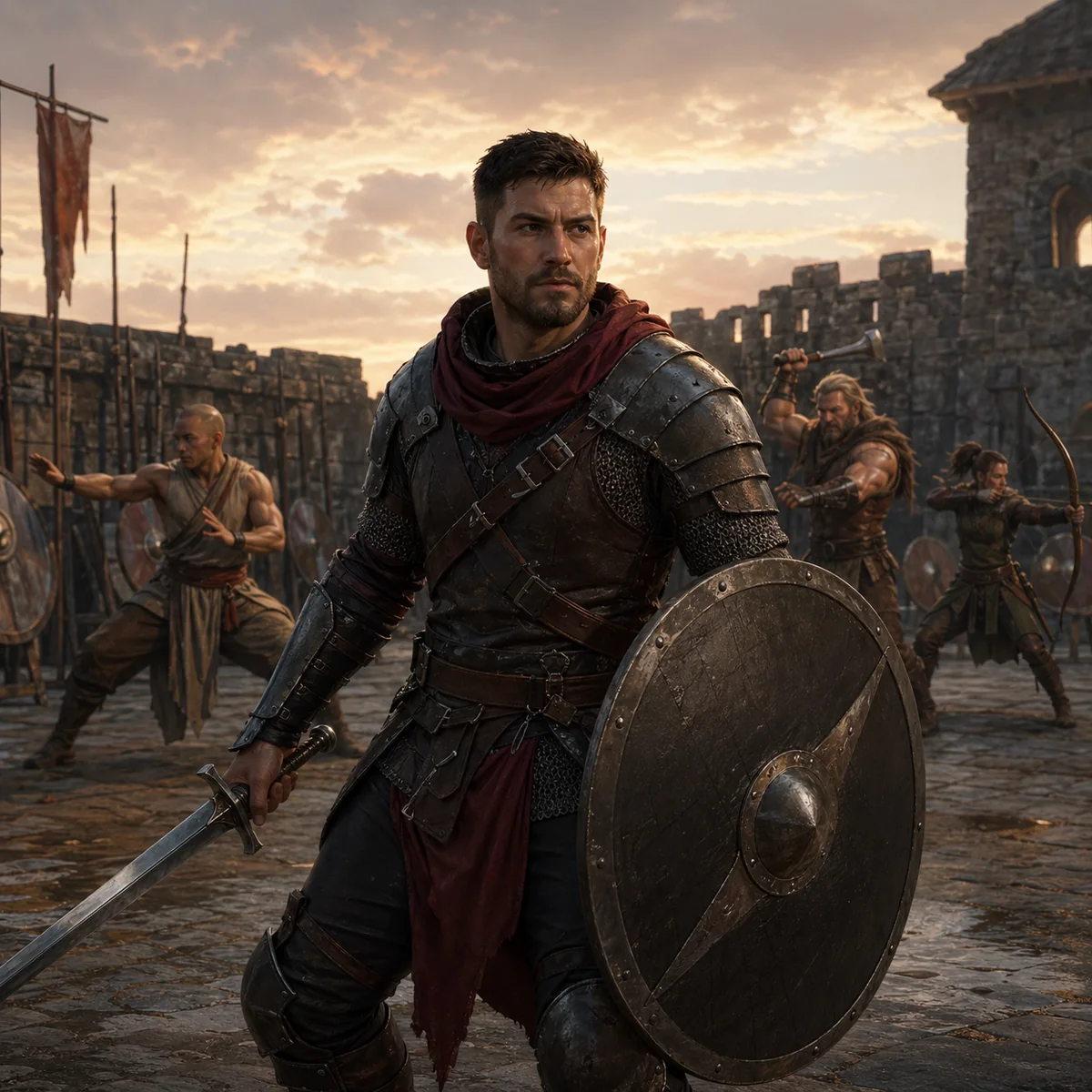
The easiest DND classes for new players are usually martial classes that give clear turns, solid durability, and very little spell management. If you want beginner-friendly options that make immediate sense, start here.
Barbarian feels like raw commitment. You get angry, move forward, and hit hard. Among all DND classes, Barbarian is one of the best choices for players who want simple combat decisions, big weapon hits, and a clear power fantasy from round one. The tradeoff is that Barbarian can feel more limited outside combat if you love utility tricks and flexible problem-solving.
Fighter is often the safest recommendation in beginner conversations about DND classes. Fighter feels reliable in almost every session because your character always has something useful to do. If you want weapon flexibility, clean positioning lessons, and room to keep learning the rules over time, Fighter remains one of the most dependable class choices in the game.
Rogue rewards timing more than brute force. In the large pool of DND classes, Rogue is especially satisfying for players who want to feel clever, precise, and useful both in and out of combat. You scout, sneak, investigate, and look for high-value openings instead of standing still and trading hits.
Ranger appeals to players who picture a hunter, tracker, or fantasy archer. Compared with other DND classes, Ranger gives you a clean blend of ranged combat, exploration themes, and light magic. If your ideal hero is a monster hunter or survival expert, Ranger usually lands that fantasy without feeling too complicated.
Magic-focused DND classes in Dungeons & Dragons
Spellcasting creates some of the most memorable moments in the game, but magical DND classes also ask for more reading, more planning, and better resource awareness. These spell-focused options are excellent when you want flexibility, but they are not equally friendly to first-time players.
Wizard is the classic answer for players who want maximum options. Out of all DND classes, Wizard offers some of the broadest problem-solving power because a prepared spell list can reshape entire encounters. The downside is that Wizard can overwhelm new players who do not enjoy comparing many spells and planning ahead.
Sorcerer offers a more instinctive magical identity. When players compare magical DND classes, Sorcerer often feels more approachable than Wizard because the class fantasy is immediate and the spell list usually feels easier to own. If you want strong magic without the heaviest preparation burden, Sorcerer is a strong option.
Warlock stands out because it mixes mechanics with built-in story tension. Among roleplay-rich DND classes, Warlock is one of the best if you want mysterious power, strong flavor, and a class choice that instantly says something about your backstory. It is especially effective for players who care about story hooks as much as damage output.
Cleric is often underestimated by beginners who assume support means passive play. In reality, Cleric is one of the most consistently useful DND classes because it can heal, protect, fight, and solve problems with divine magic. If you want to help the party without feeling sidelined, Cleric is a smart choice.
Druid is one of the most flexible DND classes, but it can also demand more effort to learn. Wild Shape, control spells, and utility tools give Druid tremendous range, yet that same flexibility can feel heavy if you are still learning the rhythm of the game. For players who love unusual solutions, Druid is fantastic; if you choose it, read the DND druid spells guide before your first long campaign.
Roleplay-heavy and identity-driven DND classes
Some DND classes are easy to connect with because the fantasy is emotionally clear from the start. If you want options with strong personality, values, or performance energy, these are usually the first ones people fall in love with.
Paladin feels powerful, heroic, and purpose-driven. Compared with other melee-focused DND classes, Paladin gives you a great balance of durability, strong hits, and a little magic without the full complexity of a dedicated caster. It is also one of the easiest classes to roleplay because vows, ideals, and duty naturally create character direction.
Bard is one of the most flexible DND classes because it can support, influence, improvise, and contribute in many different scenes. Bard is best for players who enjoy social interaction, creative solutions, and the idea that personality matters just as much as raw combat efficiency.
Monk is built around mobility, rhythm, and style. Among fast-moving DND classes, Monk is perfect for players who want to cross the battlefield, reposition constantly, and feel physically expressive in combat. It is fun and distinctive, though sometimes a little less intuitive for total beginners than Fighter or Barbarian.
Which DND Classes Are Best for Beginners?
If you want the practical answer, the most beginner-friendly DND classes are usually Fighter, Barbarian, Rogue, and Paladin. These classes work so well for first characters because they give you clear jobs, understandable turns, and enough power to feel effective without drowning you in spell text.
- Fighter: the best all-around starting point if you feel unsure.
- Barbarian: ideal if you want direct melee power and low complexity.
- Rogue: great for players who like stealth, skills, and tactical movement.
- Paladin: strong if you want heroic flavor, melee strength, and a touch of magic.
The harder beginner options among DND classes are usually Wizard, Druid, and sometimes Bard. These classes are excellent, but they shine most when you already enjoy reading abilities carefully and managing more tools at once.
How to Choose Between DND Classes
The best way to compare DND classes is not to ask which one is strongest in theory. The better question is which of these DND classes matches the way you want your turns to feel. If you choose from that angle, your first character is much more likely to stay fun after the novelty wears off.
- If you want simple turns: start with Barbarian, Fighter, or Rogue.
- If you want lots of magic: look at Wizard, Sorcerer, Cleric, Warlock, or Druid.
- If you want front-line action: choose Barbarian, Fighter, Paladin, or Monk.
- If you want a back-line caster identity: Wizard, Sorcerer, and Warlock are strong fits.
- If you want strong roleplay hooks: Paladin, Bard, Cleric, and Warlock stand out.
When you compare DND classes, try asking yourself three quick questions: Do I want simple turns or many options? Do I want magic or weapons first? Do I care more about mechanics or fantasy identity? Once a class starts to feel real, make a matching portrait in the free DnD token maker and keep the D&D dice roller ready for quick session-zero checks. Those questions usually narrow the field faster than reading every subclass on day one.
FAQ About DND Classes
What are DND classes in simple terms?
DND classes are the gameplay roles that shape how your character fights, what powers you use, and how your turns feel. The easiest way to understand DND classes is to think of them as the main playstyles of D&D.
Which DND classes are easiest for beginners?
The easiest DND classes for beginners are usually Fighter, Barbarian, Rogue, and Paladin. These DND classes give you strong early value without the heaviest spell-management burden.
Are DND classes important for roleplay?
Yes. DND classes matter for roleplay because they strongly influence tone, motivation, and fantasy identity. A Paladin, Bard, and Warlock can all be charismatic, but those DND classes carry very different emotional textures.
Do DND classes decide whether I use magic?
Very often, yes. Some DND classes barely touch magic, while other DND classes rely on spells almost every round. That is why class choice is one of the biggest decisions for new players.
How should I choose between DND classes if I am stuck?
If you feel stuck between several DND classes, choose the one whose fantasy feels immediately exciting. When two DND classes seem equally fun, start with the simpler one so your first campaign teaches the game without overwhelming you.
Final Thoughts on DND Classes
The best DND classes are not always the strongest on paper. The best DND classes are the ones that make you excited to take your turn, talk in character, and come back next week. If you are still undecided after comparing all these DND classes, start with Fighter or Rogue, learn the rhythm of the game, and let your next character become more complex once you know what parts of D&D you enjoy most.
Video Overview of DND Classes
If you want a fast visual recap after reading, this video works well as a companion summary of the main DND classes and the playstyles they support.
