
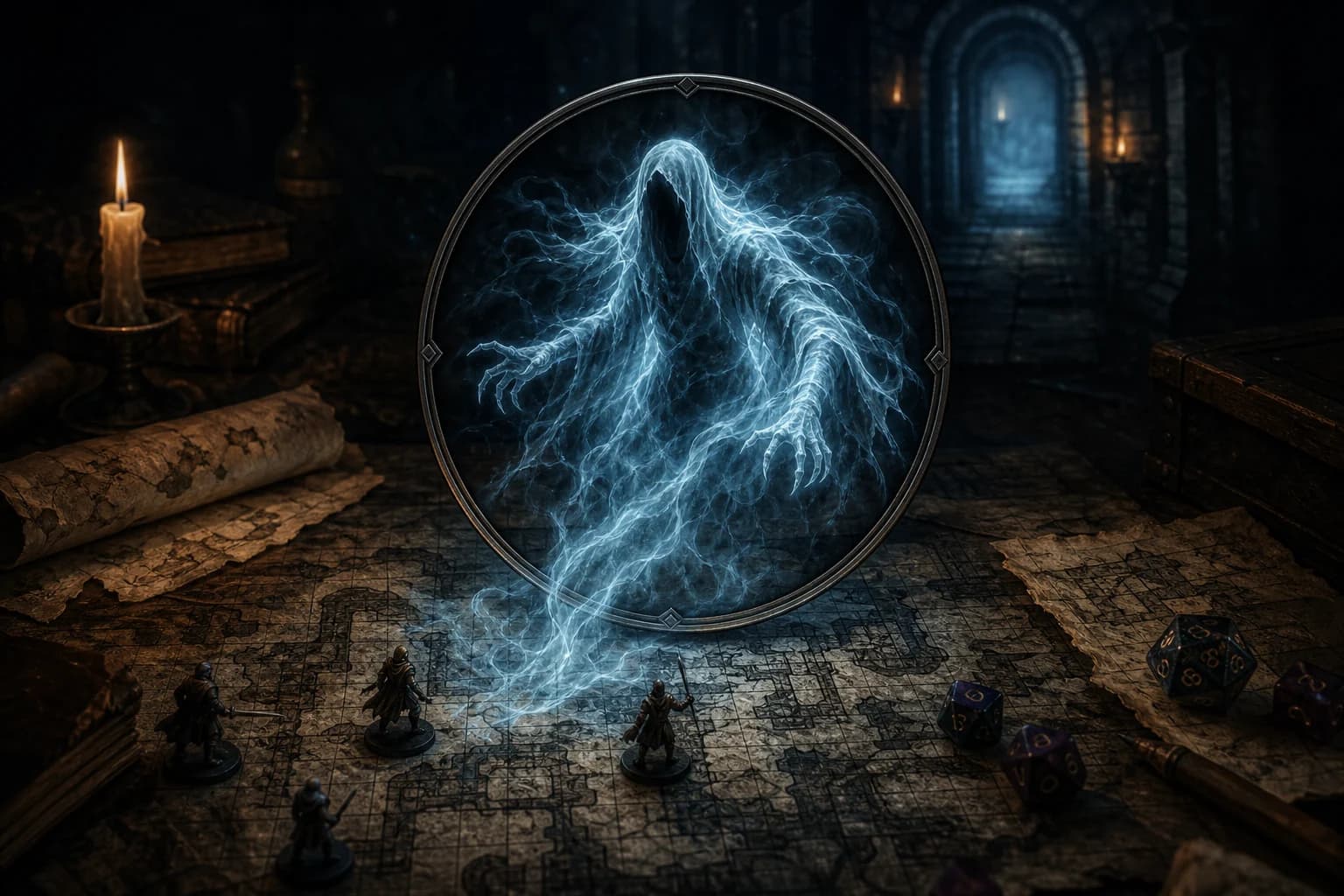
dnd ghost is an undead monster built for fear, possession, unfinished business, and movement through the Ethereal Plane. This is an encyclopedia-style guide: you get the fast stat-and-table-use answer first, then the encounter advice that keeps a ghost from becoming just another low-AC hit point bag.
| dnd ghost question | Fast answer |
|---|---|
| Creature type | Undead spirit, usually tied to trauma, duty, revenge, or a place it cannot leave. |
| Classic threat level | A serious low-to-mid-level threat because possession and fear can flip a scene quickly. |
| Signature tools | Incorporeal movement, Etherealness, Horrifying Visage, Withering Touch, and Possession. |
| Best search-intent answer | Use it as a haunted-location problem with a fight attached, not as a random undead brawler. |
| Best VTT prep | Make one clear ghost token, one possessed ally marker, and one map clue that explains why the ghost is still here. |
My table rule of thumb: if the party can solve the ghost only by reducing hit points, I probably underused the monster. A good dnd ghost should make players ask, "What happened here, and what happens if we kill the wrong body?"
If you are building this for Roll20, Foundry VTT, or Owlbear Rodeo, start by making a readable spirit portrait in the VTT token maker. For grid-first maps, the square token maker is the cleaner export path.
What Is a dnd ghost?
A dnd ghost is an undead spirit that usually exists because something in life was left unresolved. In play, that means the monster works best when its mechanics and its story point at the same wound.
The official rules are the right place to confirm the exact stat block for your table. I use the 2014 Basic Rules ghost stat block when running classic fifth-edition games, and I check the 2024 Free Rules creature stat blocks before mixing newer rules into a session. For the broader folklore idea behind restless spirits, the ghost overview on Wikipedia is useful background.
The practical difference from a skeleton, zombie, or demon is simple: a ghost is personal. It remembers. It haunts a room because the room matters. It tries to use a living body because a body is the thing it lost.
dnd ghost Quick Stats and Table Role
The classic dnd ghost is a fragile-looking undead that becomes dangerous through mobility, fear, resistance, and Possession. Do not let the low physical presentation fool the table.
| Ghost feature | What it means in play | DM mistake to avoid |
|---|---|---|
| Incorporeal movement | The ghost can pass through walls, floors, doors, and battlefield cover. | Running it in an empty square room where movement does not matter. |
| Etherealness | The ghost can appear, disappear, scout, retreat, or reset tension. | Using it only after the ghost is nearly dead. |
| Horrifying Visage | Fear changes target priority and can split a confident party. | Forgetting that frightened players need clear tactical choices. |
| Possession | The ghost turns one body into the encounter's hardest social and tactical problem. | Treating the possessed character like a normal enemy mini with no table tension. |
| Withering Touch | The ghost can still hurt a target when the story trick is not enough. | Letting the whole fight become repeated touch attacks. |
When I prep a ghost, I write the table role first: ambusher, witness, possessor, guardian, or unfinished-business quest hook. The stat block is easier to run once that job is clear.
How Does dnd ghost Possession Work?
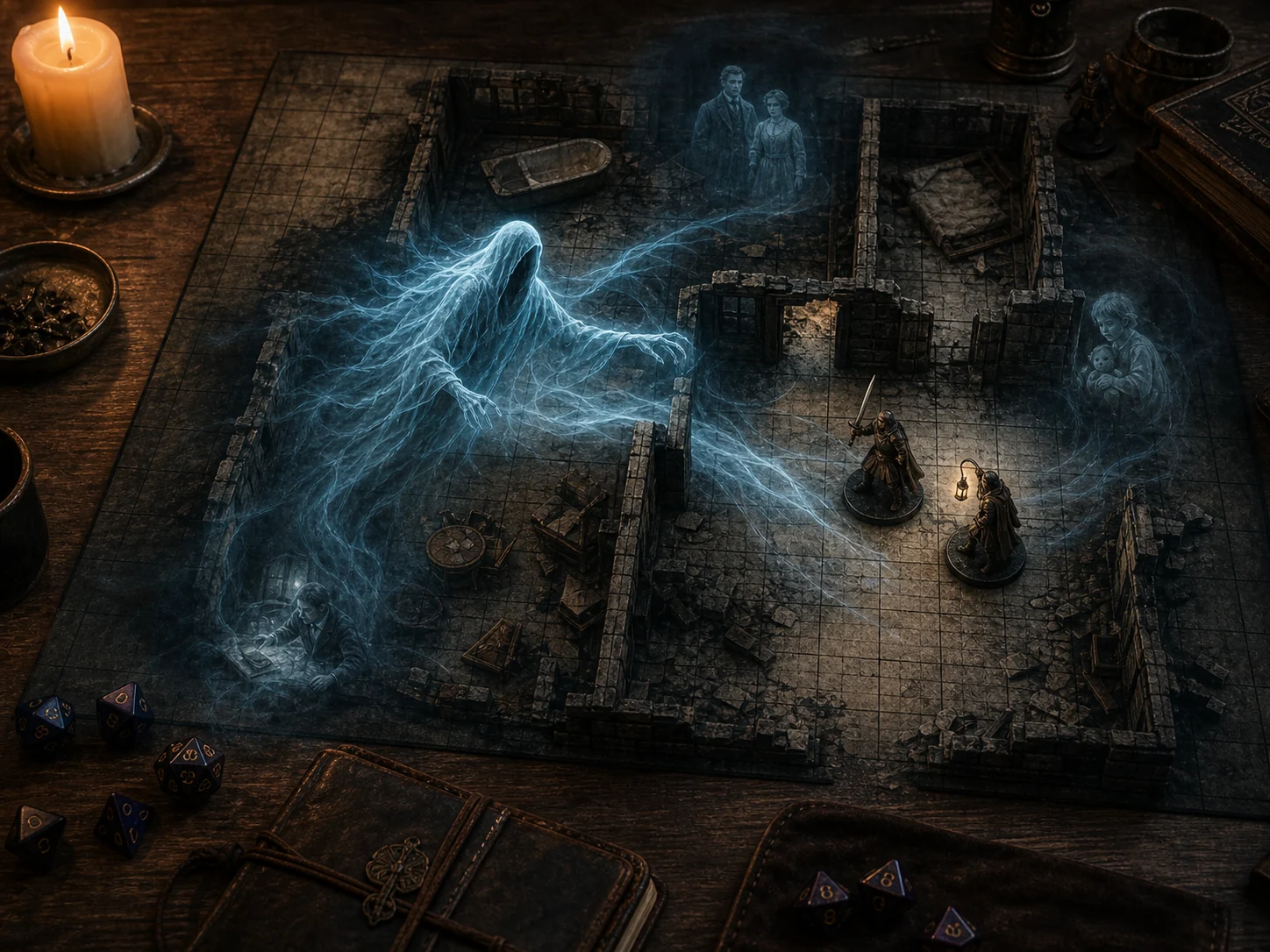
dnd ghost Possession lets the ghost take control of a humanoid target after a failed saving throw, turning an ally into the encounter's central problem. Exact limits depend on the rules version you are using, so check the stat block before the session.
At the table, the hard part is not reading the ability. The hard part is running it without making the player feel like they stopped playing.
- Tell the player what their character feels. Cold hands, borrowed memories, a voice behind their teeth. Give them something to perform.
- Keep the board state visible. Mark the possessed token clearly so nobody forgets why the party is hesitating.
- Do not hide the exit condition forever. The players should learn whether turning undead, forcing the ghost out, knocking the host down, or solving the haunting matters at your table.
- Avoid cheap gotchas. Possession is already strong. It does not need hidden rule-lawyer traps to feel dangerous.
- Use the possessed body to reveal motive. A ghost that speaks through the paladin is more memorable than one that only swings a sword.
In my games, I like possession most when it creates a bad choice instead of a hard stop: protect the host, chase the ghost, finish the ritual, or destroy the keepsake binding the spirit to the room.
How Should You Run a dnd ghost Encounter?
Run a dnd ghost encounter as a haunting with combat pressure, not as a stand-alone monster fight. The room should tell the players why this spirit exists before initiative solves anything.
A simple ghost encounter template:
- Before combat: show one impossible detail, such as wet footprints in a dry hall or dice rolling by themselves.
- First reveal: let the ghost appear where a normal creature could not stand.
- First pressure: use fear, movement through walls, or a short possession attempt to change the party's formation.
- Mid-fight clue: expose the object, body, lie, or room that explains the haunting.
- Resolution: allow combat, negotiation, ritual repair, or evidence-based roleplay to matter.
The video linked at the bottom leans into a "dice ghost" idea, and that is the part I would steal for prep: make the haunting show up in table behavior before the monster fully explains itself. A die spins when nobody touched it. A token moves one square back. A player hears a false count of damage. Small physical tells build tension faster than a paragraph of lore.
dnd ghost vs Specter, Wraith, and Banshee
A dnd ghost is usually the best pick when you want possession and unfinished business; use a specter, wraith, or banshee when you need a narrower combat identity.
| Monster | Best table identity | Use it when... |
|---|---|---|
| Ghost | Haunting, memory, possession, unresolved story | The location has a secret or the party needs to decide what justice means. |
| Specter | Simpler incorporeal undead pressure | You need a lighter spirit threat without a full social mystery. |
| Wraith | Predatory undead commander | You want a darker, more aggressive undead villain with minion energy. |
| Banshee | One terrifying scream and tragic presence | You want a set-piece scare around a deadly wail, grief, or cursed beauty. |
If your ghost plot is drifting into necromancer territory, pair this guide with the DND necromancer spells guide. If the haunting is actually a fiendish corruption problem, the dnd demons guide is the better reference.
How to Make a dnd ghost Token Readable on VTT Maps
A dnd ghost token needs a bright silhouette, strong rim light, and a clear circular or square frame because transparent spirits disappear on dark dungeon maps.
The common mistake is making the ghost too wispy. It looks great in a full-size illustration and then becomes a blue smudge at 70 px on a battle map.
- Use a pale blue or white edge glow around the head, hands, and shoulders.
- Keep the face shape readable even if the face is shadowed or blank.
- Put the hands inside the crop because ghost hands sell threat better than mist alone.
- Make a second possessed marker for the ally the ghost controls.
- Export both round and square versions if your group swaps between theater-of-the-mind scenes and grid combat.
You can make the portrait pass in the online token maker, then use the square token maker when the ghost needs a clean grid token. For saves, damage rolls, and possession tests, the D&D dice roller is the fastest way to sanity-check the encounter before game night.
FAQ About dnd ghost
Is a dnd ghost undead?
Yes, a dnd ghost is undead. That matters for features, spells, and table rulings that care about creature type.
Can a dnd ghost move through walls?
Yes, a dnd ghost is known for moving through objects and barriers, depending on the exact stat block being used. Build the encounter map so that movement through walls actually changes player decisions.
Can a dnd ghost possess a player character?
Yes, the classic dnd ghost can possess a humanoid after a failed save. Before using it, decide how you will keep the affected player involved and how the party can respond.
What level party can fight a dnd ghost?
A dnd ghost is most comfortable as a serious low-to-mid-level threat, but party level is not the only factor. Magic weapons, saving throw bonuses, turn undead, map layout, and possession rulings can swing the difficulty hard.
How do I make a ghost scary without unfairly killing players?
Make the ghost scary through clues, possession pressure, movement, and consequences before relying on damage. Give warning signs and response options so fear comes from choices, not surprise punishment.
Watch the dnd ghost Video
The companion video is about dice ghosts and table-haunting energy. I would treat it as inspiration for the first two minutes of a ghost scene: strange dice behavior, unreliable signals, and a spirit that feels present before the stat block enters initiative.
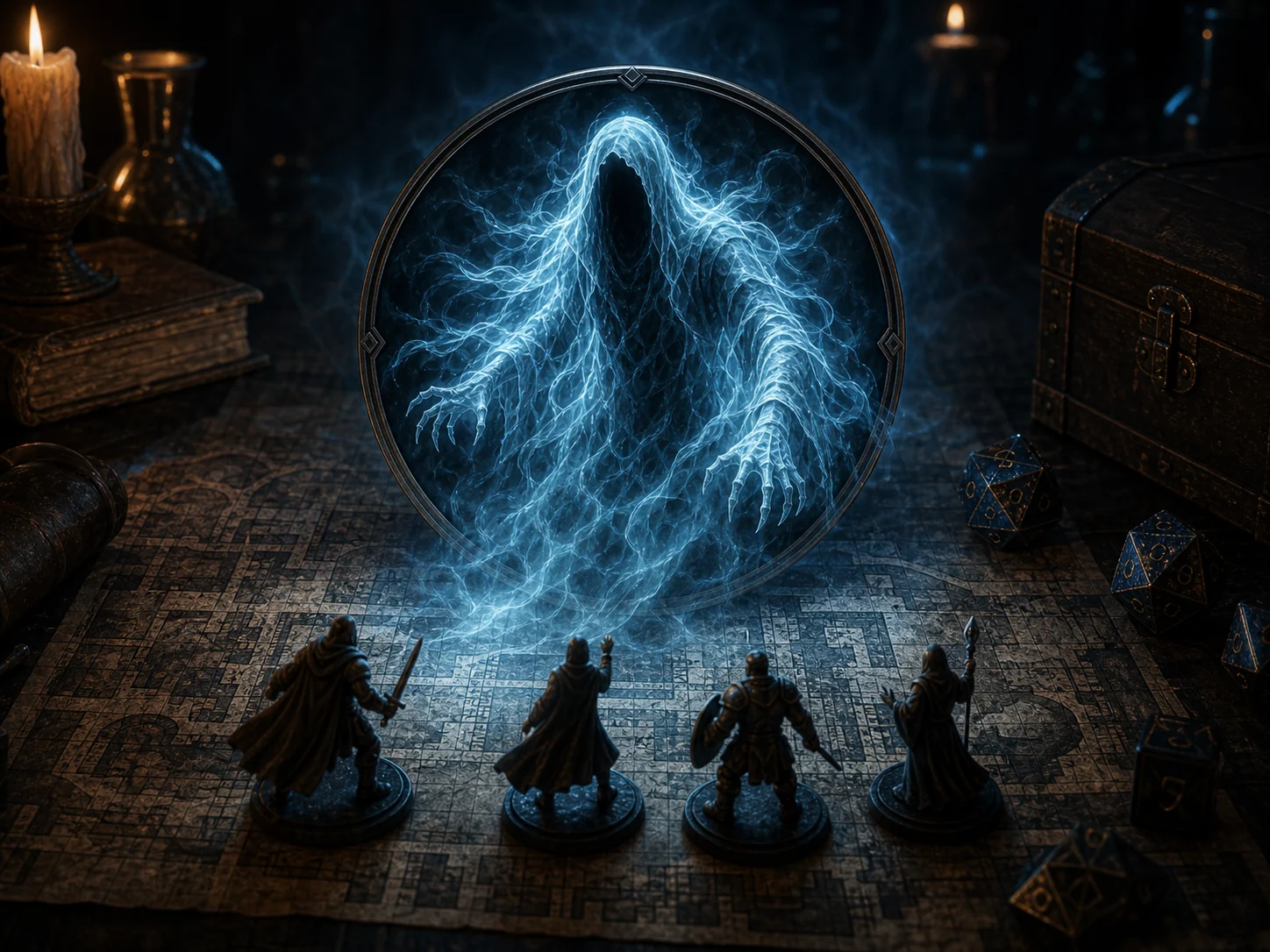
Video source: Everybody's Lying about (DICE GHOSTS).