dnd necromancer spells are best judged by table job, not by spooky flavor. This guide gives you the fast spell picks, the Animate Dead math that actually matters, and the minion habits I use so a necromancer adds pressure without turning every combat round into paperwork.
I am treating this as a spell encyclopedia plus play guide. If you only need the short answer, start with the table. If you are building a Necromancy Wizard, Death Cleric, villain caster, or undead-heavy NPC, the later sections explain which spells carry the fantasy and which ones only look good on paper.
| Need | Best necromancer spell pick | Why it earns the slot |
|---|---|---|
| Core undead engine | Animate Dead | The build-defining spell. It creates skeletons or zombies and asks you to manage a 24-hour control loop. |
| Low-level damage flavor | Chill Touch or Toll the Dead | Easy necrotic flavor without spending a spell slot. Toll the Dead is stronger when your table allows it. |
| Single-target debuff | Blindness/Deafness | No concentration, and blindness can swing a fight harder than another small damage spell. |
| Self-sustain | False Life or Vampiric Touch | False Life is cleaner early. Vampiric Touch is flavorful but needs positioning and concentration. |
| Boss pressure | Bestow Curse, Blight, Finger of Death | Good when you want the necromancer to feel dangerous without running eight extra turns. |
| Campaign utility | Speak with Dead, Gentle Repose, Clone | These spells create story leverage, investigation shortcuts, or long-term backup plans. |
What Counts as a Necromancer Spell in DND?
A necromancer spell in DND is either a Necromancy-school spell or a spell that supports the undead-control playstyle. That distinction matters because the best necromancer character rarely prepares only Necromancy spells.
The word necromancy comes from older ideas about speaking with or manipulating the dead. In D&D, the school covers death magic, undeath, life-force manipulation, and resurrection magic. That is why Revivify, Raise Dead, and Clone can sit in the same school as Animate Dead.
At the table, I use a stricter practical test: does this spell help my necromancer win scenes without annoying the table? Animate Dead passes. Speak with Dead passes. A weak necrotic damage spell that eats concentration and misses half the time may not.
All Common DND Necromancy Spells by Level
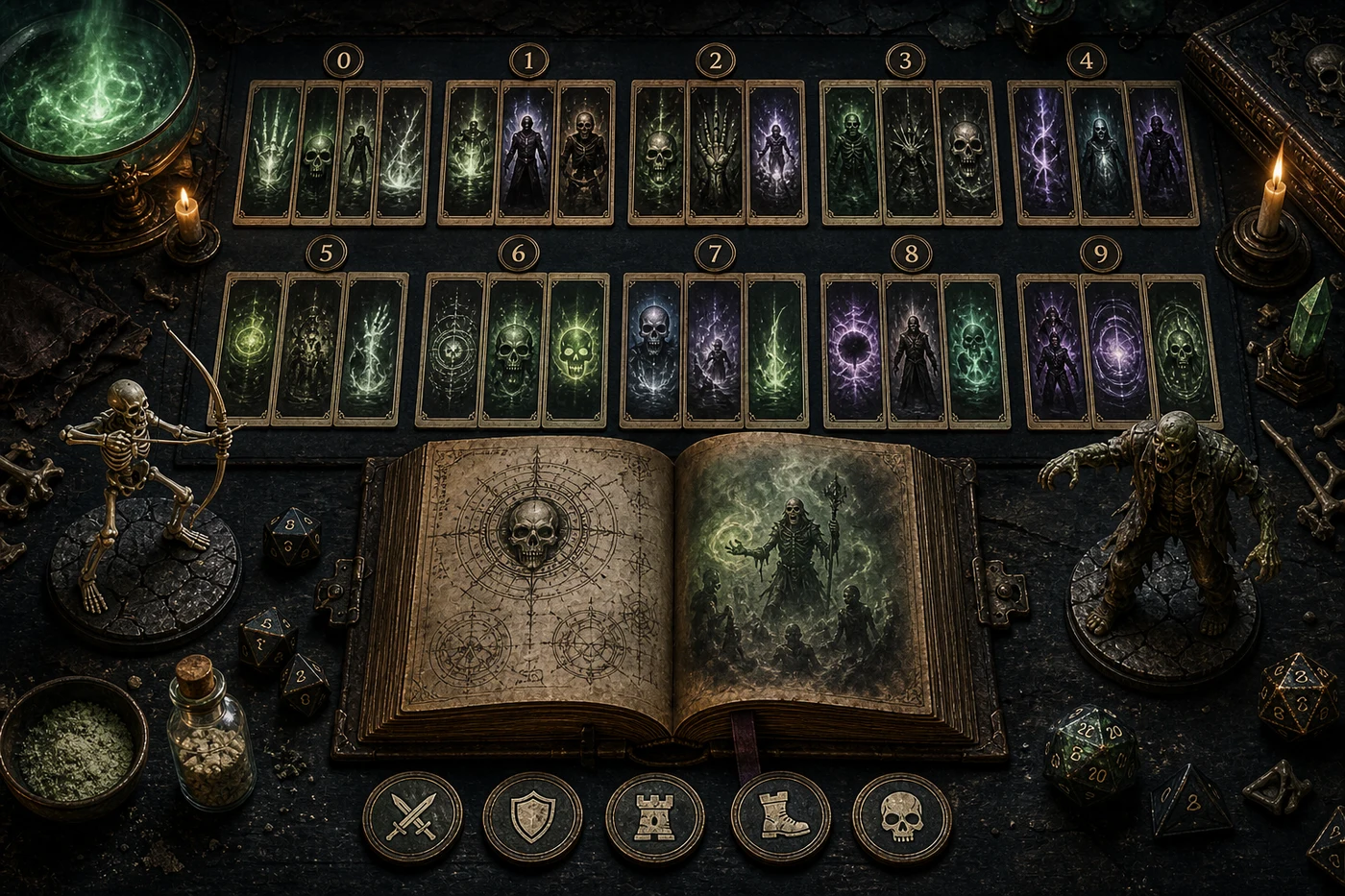
This is the quick dnd necromancer spells list view most players are looking for: common Necromancy-school spells grouped by spell level. Source availability varies by campaign, class list, and DM, so treat this table as a planning checklist before you lock a character sheet.
| Spell level | Common necromancy spells | What they usually do |
|---|---|---|
| Cantrip | Chill Touch, Sapping Sting, Spare the Dying, Toll the Dead | Cheap necrotic damage, healing denial, emergency stabilization, or a low-cost control rider. |
| 1st | Cause Fear, False Life, Inflict Wounds, Ray of Sickness | Early fear, temporary hit points, touch burst damage, or poison pressure. |
| 2nd | Blindness/Deafness, Gentle Repose, Ray of Enfeeblement, Wither and Bloom | Debuffs, corpse preservation, Strength-damage reduction, or mixed damage and healing. |
| 3rd | Animate Dead, Bestow Curse, Feign Death, Life Transference, Revivify, Speak with Dead, Spirit Shroud, Summon Undead, Vampiric Touch | The main necromancer tier: undead creation, curses, investigation, revival, summons, and life drain. |
| 4th | Blight, Shadow of Moil, Spirit of Death | Single-target damage, defensive darkness, or a stronger death-themed summon if your table allows the source. |
| 5th | Contagion, Danse Macabre, Enervation, Negative Energy Flood, Raise Dead | Disease effects, temporary undead squads, draining beams, zombie creation, or resurrection. |
| 6th | Circle of Death, Create Undead, Eyebite, Harm, Magic Jar, Soul Cage | Large-area necrotic damage, stronger undead, repeatable debuffs, possession, and soul utility. |
| 7th | Finger of Death, Resurrection, Tether Essence | High damage with permanent zombie payoff, major resurrection, or linked-damage tricks. |
| 8th | Abi-Dalzim’s Horrid Wilting, Clone | Battlefield-scale necrotic damage or long-term death insurance. |
| 9th | Astral Projection, Time Ravage, True Resurrection | Planar travel, brutal aging magic, or the strongest resurrection tier. |
For strict rules sourcing, use the spell text your table owns. The list above intentionally mixes core and commonly used expansion spells because that is how most players search for necromancer options in practice.
Best DND Necromancer Spells by Level
The best dnd necromancer spells by level are the ones that give you reliable value before, during, and after combat. I would rather prepare one boring spell that always matters than three edgy spells that only work in one perfect scene.
| Level | Top picks | Table note |
|---|---|---|
| Cantrip | Chill Touch, Toll the Dead, Spare the Dying | Chill Touch blocks healing and fits the theme. Toll the Dead is the better damage cantrip if available. |
| 1st | False Life, Ray of Sickness, Cause Fear | False Life is the cleanest low-level survival pick. Ray of Sickness is less reliable because poison is resisted often. |
| 2nd | Blindness/Deafness, Gentle Repose, Ray of Enfeeblement | Blindness/Deafness is the standout because it does not use concentration. |
| 3rd | Animate Dead, Bestow Curse, Speak with Dead, Vampiric Touch | This is where the fantasy turns on. Animate Dead is the anchor; Speak with Dead is the investigation tool. |
| 4th | Blight, Shadow of Moil | Blight is direct and simple. Shadow of Moil is excellent on the right Warlock-style build. |
| 5th | Danse Macabre, Enervation, Negative Energy Flood | These are book-dependent. Ask your DM before building the character around them. |
| 6th | Create Undead, Circle of Death, Eyebite, Magic Jar | Create Undead is the iconic upgrade, but Magic Jar is the real campaign-warping spell if your DM allows it. |
| 7th-9th | Finger of Death, Clone, Abi-Dalzim’s Horrid Wilting | At high levels, the best necromancer spells either end problems or create permanent leverage. |
Do not read that table as "prepare all of these." A necromancer still needs defense, movement, and answers to enemy magic. I almost always keep space for Counterspell or Dispel Magic on a Wizard because losing your undead engine to one enemy caster feels terrible.
How Does Animate Dead Work for a DND Necromancer?
Animate Dead is a 3rd-level Necromancy spell that turns a Medium or Small humanoid corpse into a zombie, or a pile of bones into a skeleton, then lets you control it for 24 hours. That is the spell every necromancer player needs to understand before chasing fancier options.
The official text is available in both the 2014 Basic Rules and the 2024 Free Rules. The practical parts are similar enough that most tables care about the same questions:
- Casting time: 1 minute, so this is not a panic button in the middle of initiative.
- Range: 10 feet, so you need access to the corpse or bones.
- Control: 24 hours. Recast before the timer expires or your servant stops obeying.
- Command cost: a bonus action to mentally command creatures you made with the spell within 60 feet.
- Same-command limit: if you command several at once, the spell expects the same command for each.
- Upcasting: higher slots animate or reassert control over two extra undead per slot level above 3.
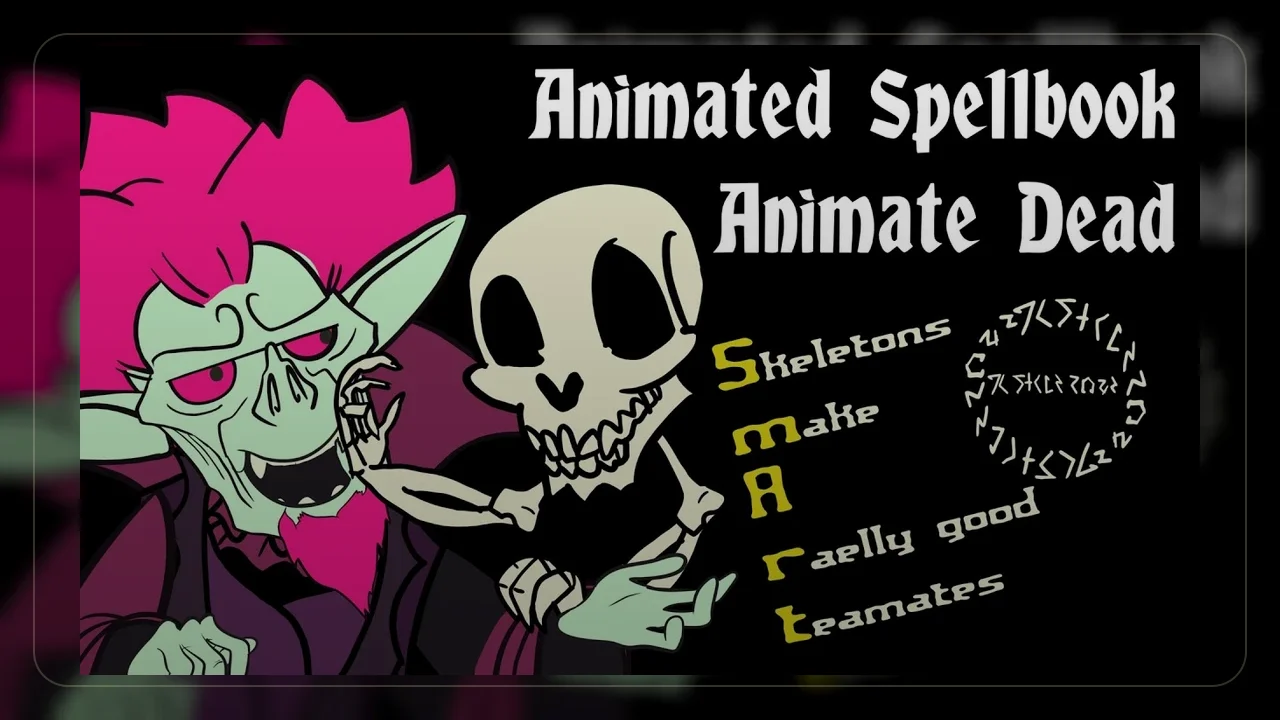
The video at the bottom is useful because it frames Animate Dead as a spell about teammates, not just a creepy animation button. I agree with that framing, with one condition: you need a table procedure before the army appears.
Are Skeletons or Zombies Better for Animate Dead?
Skeletons are usually better for damage and ranged pressure, while zombies are better as slow blockers that can absorb ugly hits. The right pick depends on what job your undead servant has this session.
| Choice | Best use | What to watch |
|---|---|---|
| Skeleton | Ranged attacks, guard duty, flanking pressure, carrying simple gear. | Low HP. They need cover, spacing, and simple commands. |
| Zombie | Door blocking, corridor clogging, soaking hits, horror scenes. | Low AC and slow movement. They often waste turns if terrain is messy. |
In my own games, skeletons are easier to run cleanly because "stand there and shoot that target" is fast. Zombies are better when the goal is not damage. A zombie in a narrow corridor can buy a round that saves a Wizard; a zombie trying to chase archers across a large map is mostly comedy.
Best Spell Loadout for a Necromancer Wizard
A good Necromancer Wizard loadout mixes undead spells with defense, control, and emergency answers. The subclass fantasy is death magic, but your actual job is still "Wizard who solves problems."
| Character stage | Prepare or learn | Why it works |
|---|---|---|
| Levels 1-4 | False Life, Chill Touch, Mage Armor, Shield, Web | You are not a real minion caster yet. Survive, control space, and keep the death flavor light. |
| Levels 5-8 | Animate Dead, Counterspell, Dispel Magic, Fear, Blindness/Deafness | This is the sweet spot. Animate Dead gives a board presence; control spells keep the board readable. |
| Levels 9-12 | Danse Macabre, Enervation, Wall of Force, Create Undead | Add stronger undead options, but do not drop the control spells that keep your party alive. |
| Levels 13+ | Finger of Death, Clone, Simulacrum, contingency-style defenses | High-level necromancers become planners. Permanent assets matter more than one spooky blast. |
If you are still choosing the base class, start with the DND classes guide. If you keep losing concentration or dropping before your undead can matter, read the D&D Constitution guide before blaming the spell list.
How Do You Run Necromancer Minions Without Slowing Combat?
You run necromancer minions quickly by grouping commands, using average damage when the DM agrees, and deciding the undead plan before your turn starts. This is the difference between a cool necromancer and a player everyone quietly resents.
- Write the 24-hour timer down. I put the expiration time beside the spell slot used to maintain control.
- Use squads, not individuals. Four skeletons are "archer squad," not four separate dramatic monologues.
- Pre-roll attacks when possible. Ask your DM first, then roll a small block of d20s together.
- Keep commands boring. "Shoot the ogre," "guard this door," and "follow me" beat clever legal contracts.
- Accept losses. Do not spend five minutes saving one 13 HP skeleton if the scene is moving.
- Respect town scenes. Walking into a market with corpses can become the whole session. Ask the table if that is fun first.
For bosses and NPC villains, I usually avoid a giant undead pile. Two or three signature undead plus one strong spell is easier to run and more memorable. The villain should scare the players, not make them wait while the DM rolls twelve shortbow attacks.
How Should a Necromancer Look on a VTT Token?
A necromancer VTT token should read as undead magic at 512 px without hiding the face or silhouette. Green smoke everywhere looks fine at full size, then turns into a muddy blob on a battle map.
When I make necromancer tokens in Token Maker, I keep the magic effect around the hands, eyes, or border. I avoid covering the whole portrait because Roll20, Foundry VTT, and Owlbear Rodeo all punish noisy token art when zoomed out.
- Use bone, silver, or dark iron frames for undead casters and grave clerics.
- Keep one readable accent color such as sickly green, pale blue, or cold violet.
- Make minion tokens simpler than the caster token so the map hierarchy is obvious.
- Export at 512 or 1024 px depending on whether the token is for play or a reusable campaign library.
- Keep the D&D dice roller open if you are testing skeleton attack blocks before a session.
FAQ About DND Necromancer Spells
What is the best dnd necromancer spell?
The best dnd necromancer spell is Animate Dead if you want the classic undead-minion playstyle. For non-minion value, Blindness/Deafness and Speak with Dead are often cleaner at the table.
What level can a necromancer cast Animate Dead?
A necromancer can usually cast Animate Dead at character level 5 if they are a full caster such as a Wizard or Cleric with access to 3rd-level spells. Exact access still depends on your class, subclass, and source rules.
How many undead can Animate Dead control?
At 3rd level, Animate Dead creates one skeleton or zombie, or reasserts control over up to four undead you previously animated. Each slot level above 3 adds two more undead to the animate or reassert-control limit.
Can a Wizard be a necromancer in DND 5e?
Yes. A Wizard can play the necromancer role, and the School of Necromancy subclass is the most obvious route in 2014-style 5e games. Clerics can also use several key necromancy spells.
Does Animate Dead require concentration?
No. Animate Dead does not require concentration. The important limit is the 24-hour control duration, which you maintain by recasting the spell before control expires.
Are skeletons better than zombies in DND?
Skeletons are usually better for ranged damage and clean turns. Zombies are better as blockers or horror props because they are tougher but slower and less accurate.
Is necromancy evil in DND?
Not automatically by rules, but many DND worlds treat undead creation as taboo or evil. Ask your DM before making Animate Dead a public-facing part of your character.
Watch: D&D 5E Animate Dead
The video from the keyword sheet is D&D 5E Animate Dead by Zee Bashew. I used it as the capstone because it nails the practical lesson: Animate Dead is funniest and strongest when you treat skeletons as simple teammates with simple jobs. Keep the commands clean, keep the turns fast, and your necromancer will feel clever instead of exhausting.