If you searched for dnd counterspell, you probably want the ruling before the debate: Counterspell is a 3rd-level Abjuration reaction that interrupts another creature while it is casting a spell within 60 feet. This guide gives you the fast table, the 2014 vs 2024 rules split, and the table calls that stop a rules argument from eating the best round of combat.
| Need-to-know point | Fast answer |
|---|---|
| Spell level | 3rd-level Abjuration. |
| Core classes | Sorcerer, Warlock, and Wizard. Subclasses, feats, and table options can add access. |
| Casting time | 1 reaction, triggered by seeing a creature within 60 feet casting a spell. |
| Range / duration | 60 feet / Instantaneous. |
| Components | Somatic only, so the counterspeller needs a usable hand. |
| 2014 rule | Automatically stops level 3 or lower spells; higher spells require a spellcasting ability check unless you upcast high enough. |
| 2024 rule | The target caster makes a Constitution save; on a failure the spell fizzles, but a spell slot is not spent. |
| Best use | Stop the spell that changes the encounter, not every spell that looks annoying. |
I am treating this as a spell encyclopedia page, not a hype piece. In our games, dnd counterspell is at its best when the table knows three things before initiative starts: which rule version is active, whether characters know the spell name before reacting, and how hard the DM wants enemy casters to push back.
DND Counterspell Quick Rules
dnd counterspell is a reaction spell for stopping another spell before that spell resolves. The official text differs sharply between the 2014 Basic Rules version and the 2024 Free Rules version, so the first practical question is not "is Counterspell good?" It is "which Counterspell are we using tonight?"

- You need the reaction available. No reaction means no Counterspell.
- You need the target in range. The key number is 60 feet.
- You need to perceive the casting. Hidden casters, total cover, silence, or component removal can matter a lot.
- You need to resolve the right rules version. 2014 is slot/check based; 2024 is saving throw based.
Who Can Cast DND Counterspell?
Sorcerers, Warlocks, and Wizards are the core classes that can cast DND Counterspell. Some subclasses, feats, magic items, and optional table rules can add access, but if a player asks for the normal spell-list answer, those three classes are the clean starting point.
In actual character planning, Counterspell is easiest to justify on a caster who already wants to stand within 60 feet of enemy magic. A backline Wizard can use it defensively, a Warlock has to be more careful with limited slots, and a Sorcerer can pair it with metamagic-heavy tactics. The spell is strong on all three, but the opportunity cost is not the same.
How Does DND Counterspell Work in 2014 5e?
In 2014 D&D 5e, dnd counterspell automatically stops spells of 3rd level or lower and uses a spellcasting ability check against higher-level spells unless you upcast it. This is the version many long-running 5e tables still mean when they say "Counterspell."
The 2014 version is brutal because it can erase both the action and the spell slot. That is why it created so many famous table moments and so many DM headaches. A 3rd-level slot can stop a 3rd-level Fireball with no roll, while a 9th-level spell can still be challenged by a DC 19 ability check.
| Target spell level | Base 3rd-level Counterspell | Upcast result |
|---|---|---|
| 1st-3rd | Automatic stop | No need to upcast |
| 4th | Spellcasting ability check, DC 14 | 4th-level slot stops it automatically |
| 5th | Spellcasting ability check, DC 15 | 5th-level slot stops it automatically |
| 6th-9th | DC 16 to DC 19 ability check | Matching or higher slot stops it automatically |
One small but important detail: this is an ability check, not a saving throw and not a spell attack. In our sessions, that difference matters most for Bards, Abjuration Wizards, and any house rule that tries to add proficiency where the spell does not normally grant it.
How Does DND Counterspell Work in the 2024 Rules?
In the 2024 rules, dnd counterspell forces the target caster to make a Constitution saving throw; if the caster fails, the spell has no effect, but a spell slot used for that spell is not expended. This makes Counterspell less punishing and much less automatic.
The design shift is easy to feel at the table. The 2014 version says "I might delete your whole turn and your resource." The 2024 version says "I might delay your spell and waste your action economy, but you keep the slot." That is still strong, but it is less likely to turn every enemy caster into a frustration engine.
| Question | 2014 Counterspell | 2024 Counterspell |
|---|---|---|
| Does a low-level spell get auto-stopped? | Yes, if the target spell is 3rd level or lower. | No. The target caster makes a Constitution save. |
| Does upcasting guarantee success? | Yes, if the slot level equals or exceeds the target spell level. | No upcast guarantee is listed in the 2024 spell text. |
| Does the target lose the spell slot? | Usually yes, because the spell fails after being cast. | No, if the interrupted spell used a spell slot. |
| What defensive stat matters? | The counterspeller's spellcasting ability check. | The target caster's Constitution saving throw. |
| What casting trigger matters? | Seeing a creature within 60 feet casting a spell. | Seeing a creature within 60 feet casting a spell with Verbal, Somatic, or Material components. |
If your campaign mixes 2014 characters with 2024 rules, do not assume everyone at the table is picturing the same spell. Write the version on the character sheet or campaign note. It saves time.
When Should You Cast DND Counterspell?
You should cast dnd counterspell when the enemy spell would change the encounter more than your reaction and spell slot are worth. That sounds obvious, but it is the mistake I see most often: players counter the first visible spell instead of the spell that actually breaks the fight.
- Counter encounter-swinging spells. Big control, banishment effects, enemy escape spells, and lethal area damage are usually worth it.
- Think before countering minor damage. A small blast may hurt less than losing your reaction for Shield, Absorb Elements, or an opportunity attack.
- Protect concentration turns. If your party has already invested in Haste, Spirit Guardians, or a major control spell, blocking the enemy answer can be the real win.
- Check range before getting clever. Counterspell rewards positioning. A caster standing 65 feet away is not a valid target.
- Ask what your DM announces. "The lich begins casting" creates a very different decision from "the lich casts Disintegrate."
My personal rule is simple: I do not spend Counterspell on a spell I would be comfortable healing through or solving next round. I spend it on spells that remove player turns, split the party, end concentration, or let the villain leave with the objective.
Common Counterspell Rulings That Cause Arguments
Most dnd counterspell arguments are not about the spell's power; they are about timing, information, and reaction economy. Set these rulings before the first wizard duel and the spell becomes much cleaner.
Can you Counterspell Counterspell?
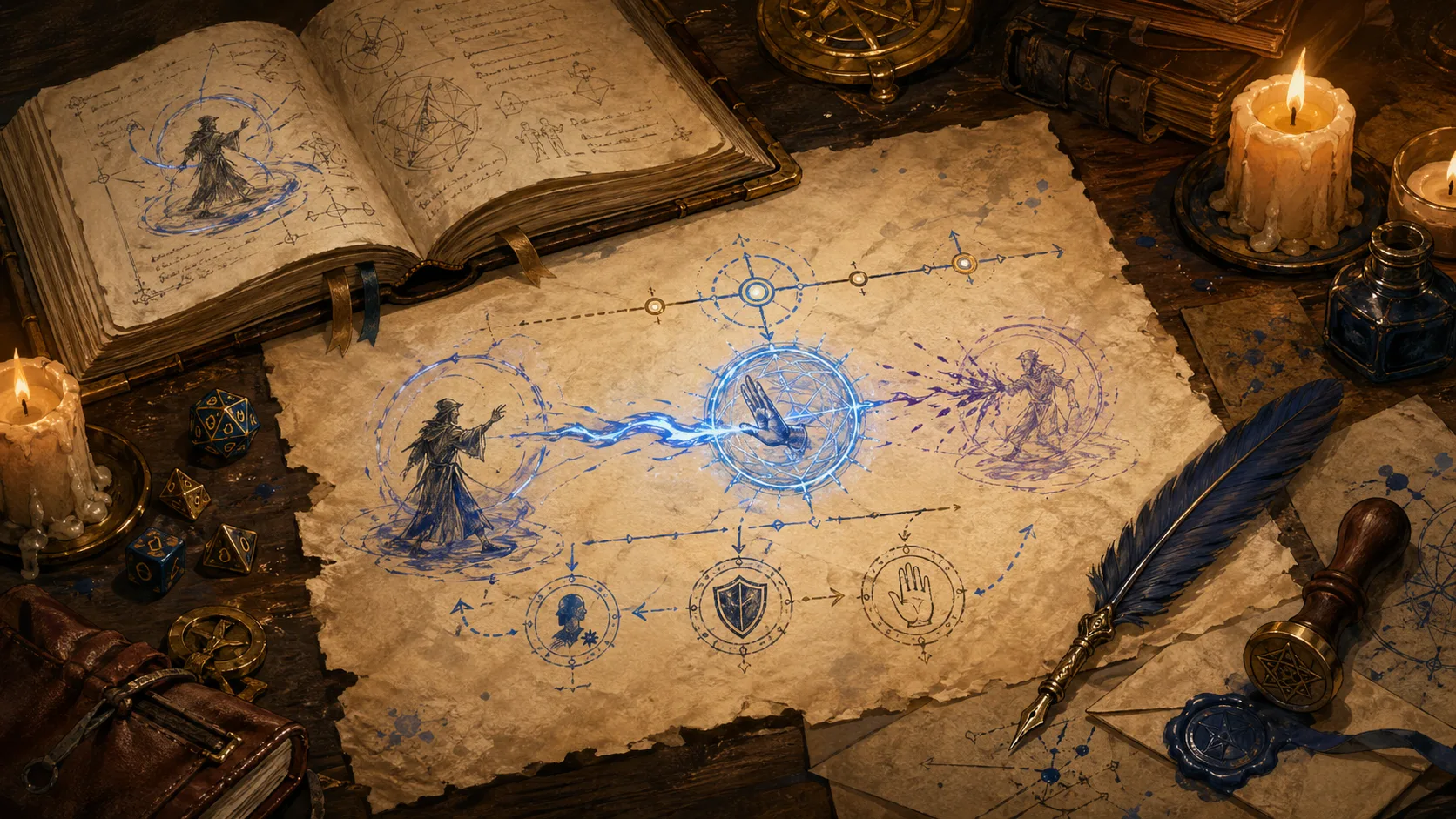
Usually yes in 2014 rules, if you can see the counterspeller, they are within 60 feet, and you still have your reaction. This is the classic "I Counterspell your Counterspell" chain that appears in many actual-play tables.
For 2024 play, check the newer one-spell-slot-per-turn rule. If you already spent a spell slot on your own turn to cast the original spell, your table may rule that you cannot also spend another slot on Counterspell during that same turn. On someone else's turn, the reaction is usually cleaner.
Do you know what spell is being cast?
By default, Counterspell only needs you to see a creature casting, not to know the spell name. Whether the DM announces the exact spell before reactions is a table policy. I strongly recommend choosing one policy and using it for both players and monsters.
Does Subtle Spell beat Counterspell?
It can. If a spell has no perceivable components, there may be no visible casting for Counterspell to interrupt. The 2024 wording makes this even clearer by tying the trigger to spells with Verbal, Somatic, or Material components.
Can Counterspell stop a magic item spell?
Sometimes, but not always. The key question is whether a creature is actually casting a spell and whether that casting is perceivable. If the item simply creates a magical effect without spellcasting, Counterspell is the wrong tool; Dispel Magic or another answer may matter more.
My DM Policy for Counterspell
I like dnd counterspell when it creates a hard choice. I dislike it when it becomes a reflex tax. The video below works as a useful reminder: the memorable part of a famous Counterspell scene is not just "the spell was stopped." It is the cost, the timing, and the table realizing that one reaction mattered.
For DMs, my practical policy is:
- Announce casting consistently. Do not give monsters more information than players get.
- Use enemy Counterspell sparingly. One important counter feels dramatic; every mage having it feels like paperwork.
- Let positioning matter. Range, cover, invisibility, silence, and line of sight should do real work.
- Tell players which version is active. 2014 and 2024 Counterspell are different enough to change builds.
Using Counterspell with VTT Prep
If you are building a spellcaster villain, archmage NPC, or abjurer PC for a virtual tabletop, make the Counterspell-ready character easy to read on the map. A clear hand pose, arcane focus, or blue-gold warding effect helps everyone remember that this token is not just another ranged attacker.
You can prep that portrait in the Token Maker editor, then keep the D&D Dice Roller open for the 2014 ability check or the 2024 Constitution save. If you are still choosing the caster chassis, the DND classes guide, DND druid spells list, and Constitution guide are the closest related reads on this site.
FAQ About DND Counterspell
What level is DND Counterspell?
DND Counterspell is a 3rd-level Abjuration spell. It is most commonly associated with Sorcerers, Warlocks, and Wizards, though some subclasses and expanded lists can change access.
Can DND Counterspell stop any spell?
No. DND Counterspell only works when its trigger, range, and perception requirements are met. It cannot stop a spell already resolved, a caster you cannot perceive, or a magical effect that is not actually a spell being cast.
Does Counterspell waste the enemy spell slot?
It depends on the rules version. In 2014 5e, a successfully countered spell normally wastes the target's slot. In the 2024 rules, the interrupted spell has no effect, but a spell slot used for it is not expended.
Can you Counterspell if you do not know the spell name?
Yes, if your table only requires seeing the casting trigger. Some DMs give the spell name before reactions, some only describe the casting, and some allow another character to identify the spell. Pick one policy before combat.
Is DND Counterspell overpowered?
Counterspell is powerful, but the table procedure matters more than the spell alone. The 2014 version can feel oppressive if every enemy caster has it. The 2024 version is softer because it gives the target a save and preserves spell slots.
Watch the Counterspell Video
The video attached to this keyword is Critical Role - Sam the Wide Deceiver - Spoilers Ep 114. I would not treat it as a rules tutorial. Treat it as a design lesson: Counterspell hits hardest when it is a meaningful sacrifice, not a button everyone presses every round.