
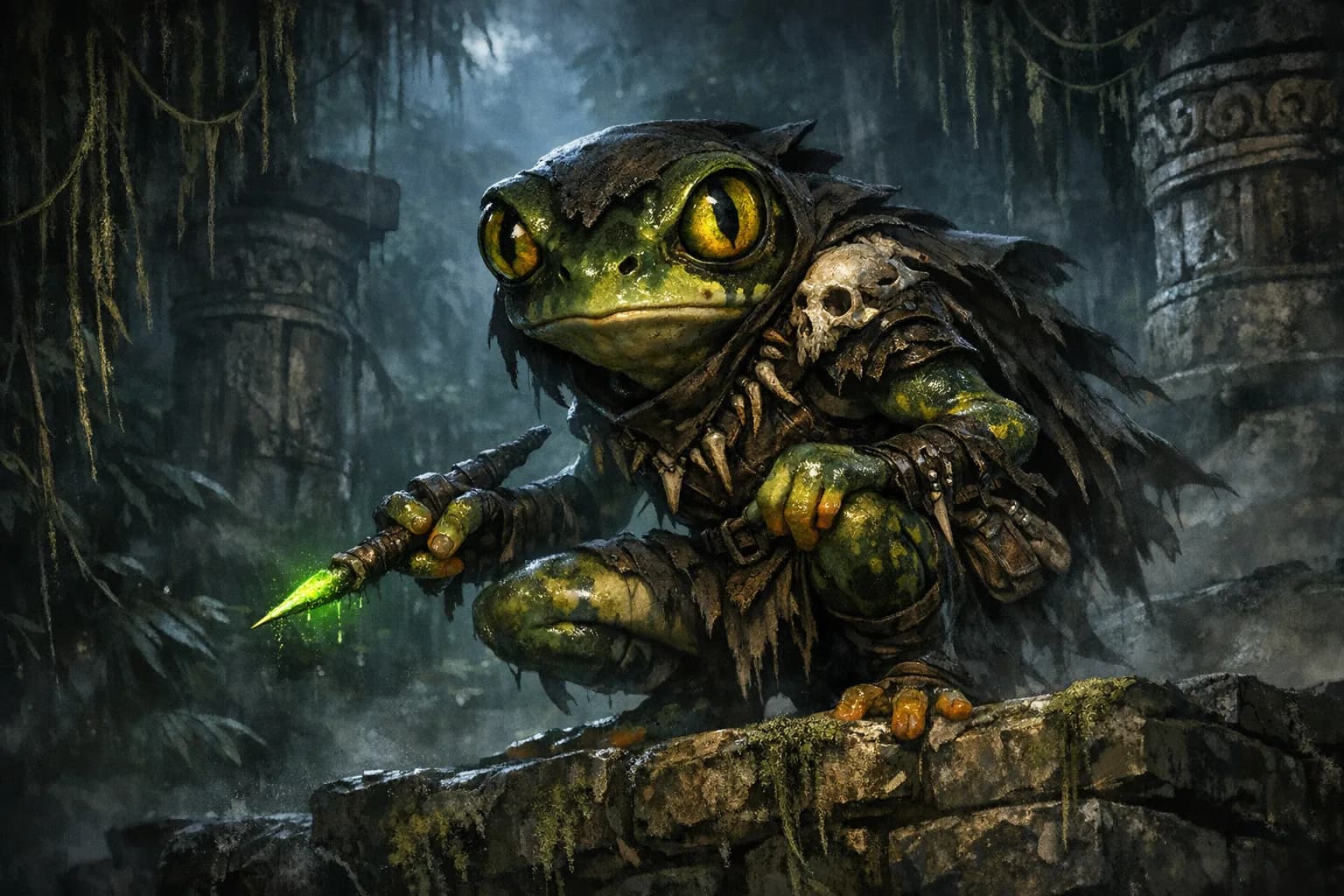
If you searched for dnd grung, you probably want the fast answer first: is this frogfolk race actually worth asking your DM about, what makes it strong in play, and what makes some tables hesitate? This guide answers those questions up front, then gets practical. In my experience, Grung is fun when you treat it like a mobility-and-pressure pick, not a novelty costume with poison skin.
This page is built for encyclopedia-style search intent, so the quick reference comes first. After that, I break down the rules, the DM approval issues, the best classes, and the roleplay choices that make a dnd grung character memorable instead of exhausting.
| Need-to-know point | Fast answer |
|---|---|
| What is a DND Grung? | A small poisonous frogfolk ancestry from One Grung Above, built around mobility, poison, and jungle flavor. |
| Is it official? | It was published by Wizards of the Coast, but outside the main core books, so DM approval matters more than usual. |
| Best classes | Monk, Ranger, Fighter, and Rogue are the cleanest fits for most players. |
| Biggest strengths | Climb speed, standing leap, poison immunity, amphibious movement, and disruptive map control. |
| Biggest drawback | Water Dependency is real, and some DMs dislike how awkward the poison rules can get at the table. |
| Best campaign fit | Jungle, swamp, ruin, and vertical dungeon campaigns where movement matters. |
What Is a DND Grung?
A dnd grung is a small amphibious frogfolk character option best known for poisonous skin, powerful jumping, and a strict jungle-caste identity.
The race comes from One Grung Above on D&D Beyond, not from the Player’s Handbook. For lore context, the Forgotten Realms Wiki entry for grung is useful because it gives you the broad setting picture: tropical habitat, caste-coded colors, and a culture that can feel alien even by D&D standards.

- Size: Small.
- Main stat lean: Dexterity and Constitution in the original writeup.
- Most important traits: poison immunity, poisonous skin, standing leap, amphibious breathing, climb speed, and water dependency.
- Playstyle identity: mobile skirmisher, awkward problem-solver, and chaos magnet for DMs who like clean encounter geometry.
- Best fantasy: jungle scout, toxic ambusher, weird monk, or hyper-mobile hunter.
Is Grung Official in D&D 5e?
Yes, dnd grung was officially published by Wizards of the Coast, but it sits in a side supplement rather than a mainline player book.
That distinction matters. In practice, many players treat Grung as "official but optional" because it lives in One Grung Above instead of a core ancestry chapter. That is why experienced DMs often ask for a quick conversation before approving it, especially in long campaigns.
If you want the simplest rule-of-thumb, use this one: Grung is published content, but not default content. Ask before building around it.
What Will Your DM Care About Before Approving a DND Grung?
Your DM will usually care about four things first: poison rulings, water dependency, campaign tone, and whether the race fits the setting.
This is also why the linked video works as a useful companion piece. Its whole angle is "how DMs react to the race you bring to the table," and that is exactly the right lens for dnd grung. Grung is not controversial because it is weak. It gets reactions because it creates friction points that a DM has to actively manage.
- Poisonous Skin: direct contact and piercing-weapon interactions can create repeated save calls.
- Water Dependency: the race needs one hour of immersion each day, which changes travel logistics immediately.
- Tone fit: a brightly colored poison frog character can feel perfect in Chult and bizarre in a grim human court campaign.
- Cultural fit: the grung caste system is strong flavor, but not every table wants to unpack that much social baggage.
- Language edge case: rules-as-written Grung is not always as socially plug-and-play as common player races, so your DM may want to settle that at session zero.
My DM Approval Checklist for Grung
Before I lock in a Grung character, I ask four direct questions: Are you using the original poison wording, how strict are you about water immersion, does the setting have room for a jungle frogfolk outsider, and are we smoothing the language issue? Those four answers tell you almost everything about whether the build will be fun or annoying.
Which DND Grung Traits Actually Matter in Play?
The best way to evaluate a dnd grung is not by reading the trait list once. It is by asking which traits still matter after round three, during travel, and in scenes where the map is not flat.
Poisonous Skin and poison immunity are the headline traits
Poisonous Skin is the reason Grung gets so much attention. The short version is simple: creatures that touch you can be forced into a save, and your poison can also be applied to piercing weapon attacks for extra poison damage.
The practical takeaway is even simpler. Grung punishes grapples, rewards repeated attack patterns, and makes otherwise ordinary turns feel annoying in a way many DMs notice fast. Meanwhile, poison immunity is just excellent defense. It quietly carries a lot of value over a long campaign.

Standing Leap and climb speed are what make Grung feel different
Standing Leap gives Grung a long jump up to 25 feet and a high jump up to 15 feet without a running start. Add a 25-foot climb speed, and the race stops moving like a normal Small character.
At my tables, this is the real payoff. A dnd grung is strongest when the battlefield includes ledges, trees, balconies, scaffolding, swamp roots, or ruined stonework. On a flat road, Grung is interesting. In vertical terrain, Grung becomes a real tactical headache.
Amphibious movement is nice, but Water Dependency changes the campaign more
Amphibious is great. Breathing air and water opens up some very fun scenes. But the trait that actually changes day-to-day play is Water Dependency.
If your Grung does not immerse in water for at least one hour during the day, the race takes a level of exhaustion at day’s end. That means the question is never "does this matter?" The real question is "how often will the campaign make this inconvenient?"
- In jungle or river campaigns: Water Dependency is often flavor with a little planning.
- In desert, city, or prison arcs: it becomes a recurring logistics tax.
- In one-shots: it barely matters unless the DM wants it to.
- In survival campaigns: it can become one of the race’s defining pressures.
The language issue is more important than it looks
One detail many players miss is that dnd grung is not as socially frictionless as elf, dwarf, or human. Depending on how strictly your table reads the original writeup, language can become a real early-game problem.
I do not think this is a deal-breaker. I do think it deserves an explicit session-zero ruling. If the DM wants Grung to feel strange, keep it. If the campaign needs faster integration, smooth it out and move on.
Best Classes for a DND Grung in 5e
The best dnd grung classes are the ones that convert movement, poison pressure, and Dexterity/Constitution value into reliable turns.
| Class | Why it works | My take |
|---|---|---|
| Monk | Movement, repeated attacks, weird angles, and skin-contact flavor all line up extremely well. | If you want the funniest and most distinct Grung table feel, Monk is hard to beat. |
| Ranger | Dex/Con synergy, terrain play, and ambush rhythm make the race feel natural. | Gloom Stalker is the cleanest answer if you want menace instead of comedy. |
| Fighter | A stable chassis lets the racial traits add pressure without carrying the whole build. | This is the safest recommendation if you want Grung mechanics with less risk. |
| Rogue | Mobility and vertical approach paths fit beautifully, even if you do not maximize poison triggers. | Excellent if your fantasy is "toxic frog assassin" instead of "frog blender." |
| Druid | The jungle flavor fits, but the stat synergy is less efficient than the martial options. | Pick this for theme first, not because it is the sharpest optimization shell. |
If you are still comparing race-class shells, our DND classes guide is the next tab I would open. If your Grung build is leaning toward concentration, survivability, or a higher Constitution floor, the more useful companion is our D&D Constitution guide.
Useful Tool for Grung Builds
If you want to test poison damage, jump-and-attack turns, or concentration checks without slowing your table down, use the on-site D&D dice roller. I use it for oddball race interactions because Grung creates more "wait, how does this resolve?" moments than most race picks.
How I Would Roleplay a DND Grung Without Turning It Into a Joke
The easiest mistake with dnd grung is playing it like a meme first and a person second. Frog energy is funny for ten minutes. A character with actual priorities lasts a whole campaign.
What works better is choosing one strong anchor and building around it. In practice, I think the best Grung roleplay usually starts with one of three angles: caste exile, practical hunter, or hyper-formal outsider who reads social rules too literally.
- Pick one relationship to the caste system: loyalist, exile, skeptic, or escapee.
- Decide how your Grung sees other peoples: prey, curiosity, trade partners, or confusing equals.
- Give the character one ritual habit: cleaning skin, sorting colors, measuring water, or ranking every room by threat.
- Keep the alien flavor, but keep the teamwork: strange is good, sabotage is not.
- Lean into physicality: stillness, sudden hops, wall-clinging, and short blunt statements all help sell the race fast.
Common DND Grung Mistakes
The most common dnd grung mistake is assuming the race will carry a weak build on its own. It will not.
- Mistake 1: choosing Grung for poison alone and then putting it on a build with very few meaningful attacks.
- Mistake 2: forgetting to ask about Water Dependency before the campaign starts.
- Mistake 3: picking the race for a flat urban campaign where climb speed and leap distance rarely matter.
- Mistake 4: roleplaying the character as comic relief with no center.
- Mistake 5: assuming every DM will allow the original wording without modification.
FAQ About DND Grung
Is Grung official in D&D 5e?
Yes. Grung was published by Wizards of the Coast in One Grung Above, but because it is outside the main player books, many tables still treat it as ask-first content.
Does a DND Grung need water every day?
Yes. A Grung needs to immerse in water for at least one hour each day or it suffers a level of exhaustion at the end of that day.
Is Grung poison overpowered?
It can feel overpowered at some tables, especially at low levels or in games with many contact and grappling situations. In practice, the bigger issue is often bookkeeping and repeated save calls, not raw damage alone.
What is the best class for a DND Grung?
Monk is the most distinctive fit, Ranger is the most natural hunter fit, and Fighter is the safest all-around pick if you want the racial traits without build drama.
Can a DND Grung speak Common?
That depends on how strictly your table handles the original writeup. Many DMs smooth this out for playability, but it is worth settling before session one instead of during the first tavern scene.
Watch: Why Grung Gets Such a Strong DM Reaction
If you want a lighter follow-up after the guide, this video is the right kind of companion watch. It approaches race choice from the DM-reaction angle, which fits dnd grung better than a pure optimization lens. That is exactly the conversation Grung usually triggers at real tables: not "is it possible?" but "what kind of energy does this bring into the campaign?" You can watch it on YouTube here, or use the embed below.
