
dnd demons are chaotic evil fiends from the Abyss, and the fastest way to use them well is to stop treating every demon as "a scary monster with claws." This guide gives you the demon list, the demon vs devil difference, table roles, encounter mistakes, VTT token advice, and the companion video at the bottom.
Short version: demons in DND are best when they feel unstable, hungry, and hard to negotiate with. Use devils for contracts and hierarchy. Use demons when the scene should feel like violence, corruption, and bad decisions are spreading faster than the party can contain them.
If you are preparing demon encounters for a VTT session, start by making readable demon portraits in the VTT token maker or build grid-ready encounter markers with the square token maker.
| DND demon | Fast table identity | Best use |
|---|---|---|
| Dretch | Weak, foul, disposable Abyssal foot soldier | Low-level swarm, portal spillover, ritual trash mob |
| Quasit | Small tempter, spy, familiar-style nuisance | Cult scout, cursed familiar, comic but dangerous clue-carrier |
| Shadow demon | Incorporeal ambusher that punishes darkness mistakes | Haunted ruin, stealth horror, possession-adjacent pressure |
| Vrock | Flying brute with spores and panic energy | Mid-tier aerial threat, ruined tower fight, ritual guardian |
| Hezrou | Stench-heavy brawler that turns positioning ugly | Frontline demon, sewer breach, chokepoint pressure |
| Glabrezu | Manipulator with muscle, spells, and false offers | Temptation scene, boss lieutenant, "deal first, fight later" villain |
| Marilith | Elite commander with many blades and tactical control | High-level duelist, Abyssal general, set-piece boss |
| Balor | Iconic endgame demon of fire, whip, sword, and disaster | Campaign climax, portal guardian, final fight centerpiece |
Page type note: this is an encyclopedia-style guide for dnd demons. The search intent is usually "what are the demons, which one should I use, and how are they different from devils?" so the quick reference comes before the lore.
What Are DND Demons?
DND demons are chaotic evil fiends tied to the Abyss, usually built around destruction, corruption, hunger, and unstable violence.
The official monster list is the best place to check exact stat blocks, so I link out to the D&D Beyond demon monster listing and the D&D Basic Rules monster section. For publication history and older edition context, the Dungeons & Dragons demon overview on Wikipedia is useful background.
At the table, I treat dnd demons as pressure, not just enemies. A demon should make the room worse: heat rises, shadows move, cultists panic, a portal widens, or the barbarian realizes killing one creature may not end the problem.
Are DND Demons the Same as Devils?
No. DND demons and DND devils are both fiends, but demons are chaotic evil Abyssal threats while devils are lawful evil infernal dealmakers.
| Question | DND demons | DND devils |
|---|---|---|
| Core alignment vibe | Chaotic evil: appetite, rage, mutation, ruin | Lawful evil: contracts, ranks, punishment, control |
| Best story use | A portal breach, cult mistake, cursed battlefield, spreading corruption | A bargain, debt, infernal bureaucracy, long-term manipulation |
| How they negotiate | Badly, briefly, or as a trick before violence | Very well, often with terms the party regrets later |
| Encounter feel | Messy, fast, physically dangerous, hard to contain | Controlled, political, punitive, often planned |
If your campaign needs infernal contracts, a patron, or a cold long-game villain, use the Mephistopheles DND guide as the better companion. If you want a shrine door to break open and the map to start bleeding problems, use demons.
List of Demons in DND by Table Role
A useful list of demons in dnd should group monsters by how they play at the table, not just by challenge rating.
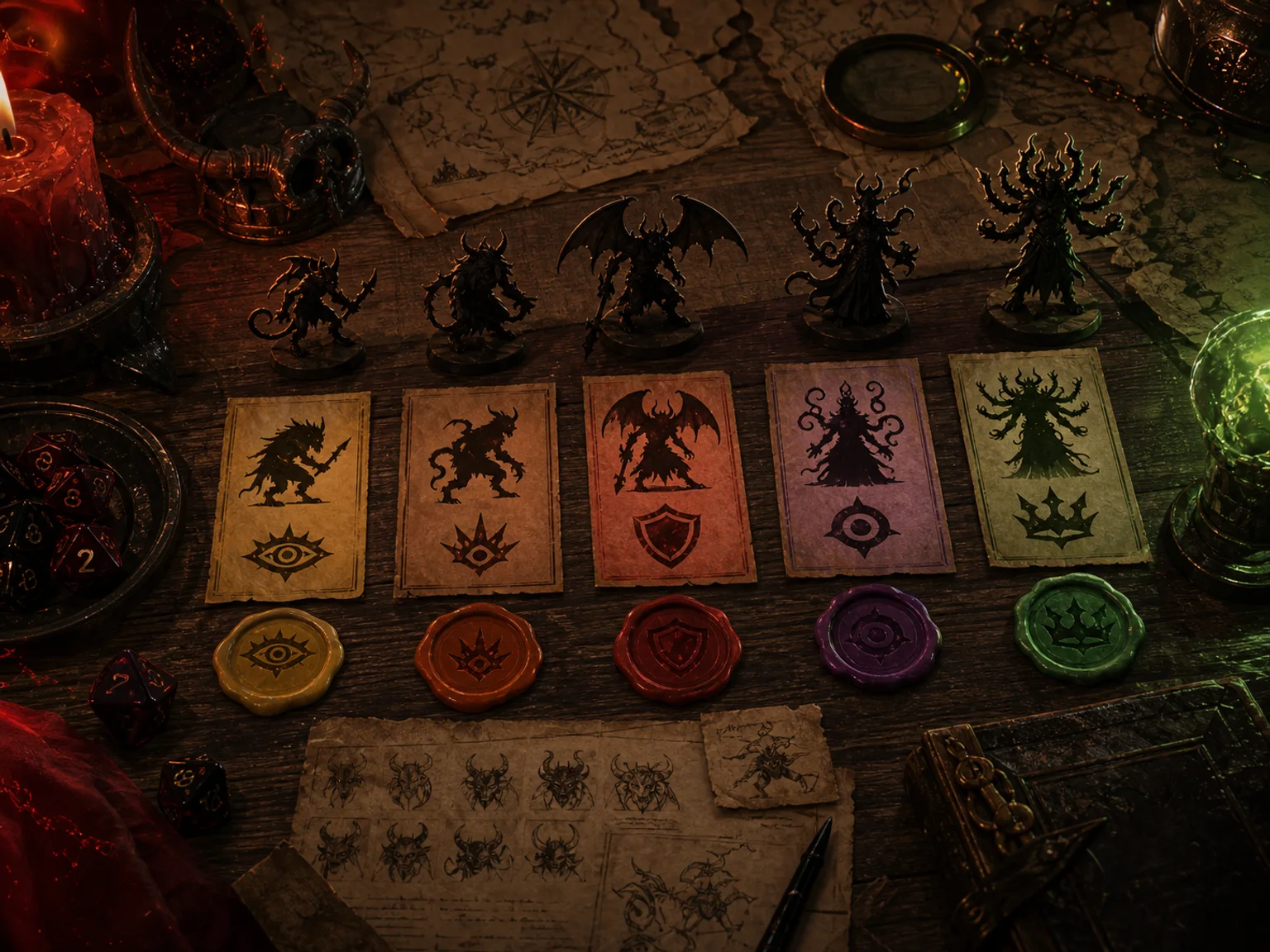
| Table role | Demon examples | How I would run them |
|---|---|---|
| Swarm pressure | Dretch, manes, lesser Abyssal mobs | Use them to show contamination and panic, not to carry the whole fight. |
| Scout or tempter | Quasit | Let it watch the party, whisper, flee, and reveal that something larger is nearby. |
| Ambush horror | Shadow demon | Make light, walls, and line of sight matter. Do not drop it into an empty bright room. |
| Mid-tier chaos brute | Vrock, hezrou, chasme | Give them a messy environment: spores, stench, flight, noise, or failed ritual terrain. |
| Smart threat | Glabrezu, nalfeshnee | Use offers, illusions, intimidation, and minions before initiative starts. |
| Elite commander | Marilith | Run it like a battlefield expert. It should reposition, punish mistakes, and direct lesser demons. |
| Final boss energy | Balor, demon lord-adjacent threats | Build the scene around arrival, fire, fear, collateral damage, and an exit problem. |
How Should You Use DND Demons in a Campaign?
Use DND demons when you want a scene to feel like a contained situation is becoming an uncontrolled disaster.
The strongest demon encounters I have run had a visible failure clock. A cult circle was cracking. A prisoner was mutating. A shrine had three seals and one was already broken. That one extra problem keeps the fight from becoming "stand here and reduce hit points."
- Give the demon a breach point: portal, summoning circle, cursed corpse, Abyssal wound, or ruined idol.
- Make the room deteriorate: spreading fire, poison fog, screaming cultists, collapsing walls, or unstable magic.
- Do not over-negotiate lesser demons: short threats and ugly bargains work better than polished speeches.
- Let stronger demons tempt before they fight: a glabrezu is scarier when the offer is almost useful.
- Plan what happens if the party retreats: demons should leave consequences behind.
Which DND Demon Should a DM Pick First?
For a first demon encounter, pick a quasit for intrigue, a dretch group for low-level chaos, or a vrock if the party is ready for a real mid-tier fight.
I would not start a new table with a wall of demon lore. Start with one clear role. If the demon is a scout, the players should notice they are being watched. If it is a brute, the map should have things to break. If it is a manipulator, the offer should cost something specific.
| Party need | Best demon pick | Why |
|---|---|---|
| Low-level warning sign | Quasit or dretch | Small enough to survive beginner play, strange enough to signal bigger Abyssal trouble. |
| Scary first boss | Shadow demon | Memorable if you use darkness, retreat paths, and possession-style fear carefully. |
| Messy combat centerpiece | Vrock or hezrou | They change positioning and force players to respect area pressure. |
| Social temptation | Glabrezu | It can lie, offer power, and still hit hard when the deal fails. |
How to Make DND Demons Feel Different from Ordinary Monsters
DND demons feel different when their presence changes the environment, not just the initiative order.
My practical rule is simple: before I add a demon, I write one sentence that starts with "Because this demon is here..." If the sentence only says "the party takes damage," I redesign the scene.
- Because this demon is here, torches burn green and shadows point the wrong way.
- Because this demon is here, the cultists stop obeying their own plan.
- Because this demon is here, a dead NPC whispers a secret they should not know.
- Because this demon is here, the portal gets wider every round unless someone spends an action closing it.
- Because this demon is here, killing it still leaves a cursed stain the party must deal with later.
How to Make DND Demons Tokens for VTT Play
A good DND demons token should show the demon's silhouette, threat type, and Abyssal mood at small map size.
For Roll20, Foundry VTT, Owlbear, or other VTT tools, I crop demons less like portraits and more like encounter icons. Horns, wings, claws, a weapon, or a visible portal edge can matter more than a perfect face crop.
- Use silhouette first: wings for vrocks, many blades for mariliths, hulking shoulders for hezrous.
- Pick border color by faction: Abyssal red, sick green, bruised violet, or ash black reads quickly.
- Keep boss tokens larger: export major demons at 1024px if the VTT map will zoom in.
- Make lesser demons visually simpler: mobs should not compete with the boss token.
- Use labels sparingly: add labels only when the party must distinguish several demon types at once.
You can build those encounter tokens in the VTT token maker. For square grid markers, use the square token maker. If the encounter has fear saves, concentration checks, or random portal effects, keep the DND dice roller open beside your map.
Common Mistakes With DND Demons
The most common mistake with dnd demons is making them look infernal but play like ordinary melee creatures.
- Mistake 1: using demons as generic red monsters with no Abyssal consequence.
- Mistake 2: mixing up demons and devils until every fiend feels like a contract lawyer.
- Mistake 3: using a flat empty map when the demon should distort the scene.
- Mistake 4: starting too big. A balor has less impact if the campaign has not earned that scale.
- Mistake 5: forgetting that demons are often best as a crisis, not a faction with tidy meeting minutes.
Video: DND Demons Companion Watch
The companion video from the keyword sheet is this DND demons video on YouTube. I use it as a practical follow-up to the article: watch for the same prep lens used here, which is to identify what each demon changes at the table before worrying about every last lore footnote.
FAQ About DND Demons
What are DND demons?
DND demons are chaotic evil fiends associated with the Abyss, usually used for destructive, corrupting, and unstable threats in Dungeons & Dragons campaigns.
Are demons and devils the same in DND?
No. Demons are chaotic evil Abyssal fiends, while devils are lawful evil infernal fiends. Use demons for chaos and corruption; use devils for contracts, hierarchy, and punishment.
What is the best first DND demon for a new DM?
A quasit or small group of dretches is usually the easiest first demon choice. They show Abyssal weirdness without forcing a beginner table into a high-level boss fight.
What is the strongest common DND demon?
The balor is one of the most iconic high-end common demons in DND. It works best as a major set-piece threat, not as a casual random encounter.
How do I make demons feel scary without killing the party?
Use environmental consequences, visible corruption, escape pressure, and clear warning signs before raw damage. The party should feel the Abyss spreading, not just see bigger attack numbers.