mephistopheles dnd is best understood as a campaign-level archdevil: ruler of Cania, master of hellfire, and the kind of patron who should make a table nervous before anyone rolls initiative. This guide gives you the quick lore answer first, then shows how I would actually use him in a D&D campaign without turning the session into a lore lecture.
If you only need the table answer: do not start with a full Mephistopheles boss fight. Start with a bargain, a proxy, a frozen room, or a contract that costs more than the party expected. That is where he becomes useful instead of just famous.
| Need-to-know point | Fast answer |
|---|---|
| Who is Mephistopheles? | Mephistopheles is an archdevil of the Nine Hells, usually tied to Cania, ice, arcane ambition, and hellfire. |
| Best table use | Use him as a patron, contract architect, endgame villain, or the unseen sponsor behind a cult. |
| What makes him different? | He is not just "a bigger devil." His hook is cold intelligence plus forbidden fire magic. |
| Can players connect to him? | Yes. A Fiend Warlock pact, legacy Mephistopheles tiefling flavor, or infernal family curse all fit. |
| Looking for a stat block? | Treat any Mephistopheles stat block as an endgame or table-approved source choice. For most campaigns, run an avatar, proxy, or contract hazard first. |
| Should you run him in direct combat? | Usually no. Use avatars, agents, contracts, and consequences until the campaign is truly high level. |
| One-line DM rule | If Mephistopheles appears, the scene should feel like a legal trap wrapped in supernatural temperature shock. |
What Is Mephistopheles in DND?
Mephistopheles in DND is an archdevil associated with Cania, the icy eighth layer of the Nine Hells, and with a dangerous obsession for arcane power. The Forgotten Realms Wiki overview is useful for broad setting context, especially if you need quick lore before writing a session.
The important thing is the contrast. He is not a simple fire villain. The best Mephistopheles scenes mix freezing control, infernal contracts, and unstable hellfire research. That mix gives him a sharper identity than "red devil with horns."
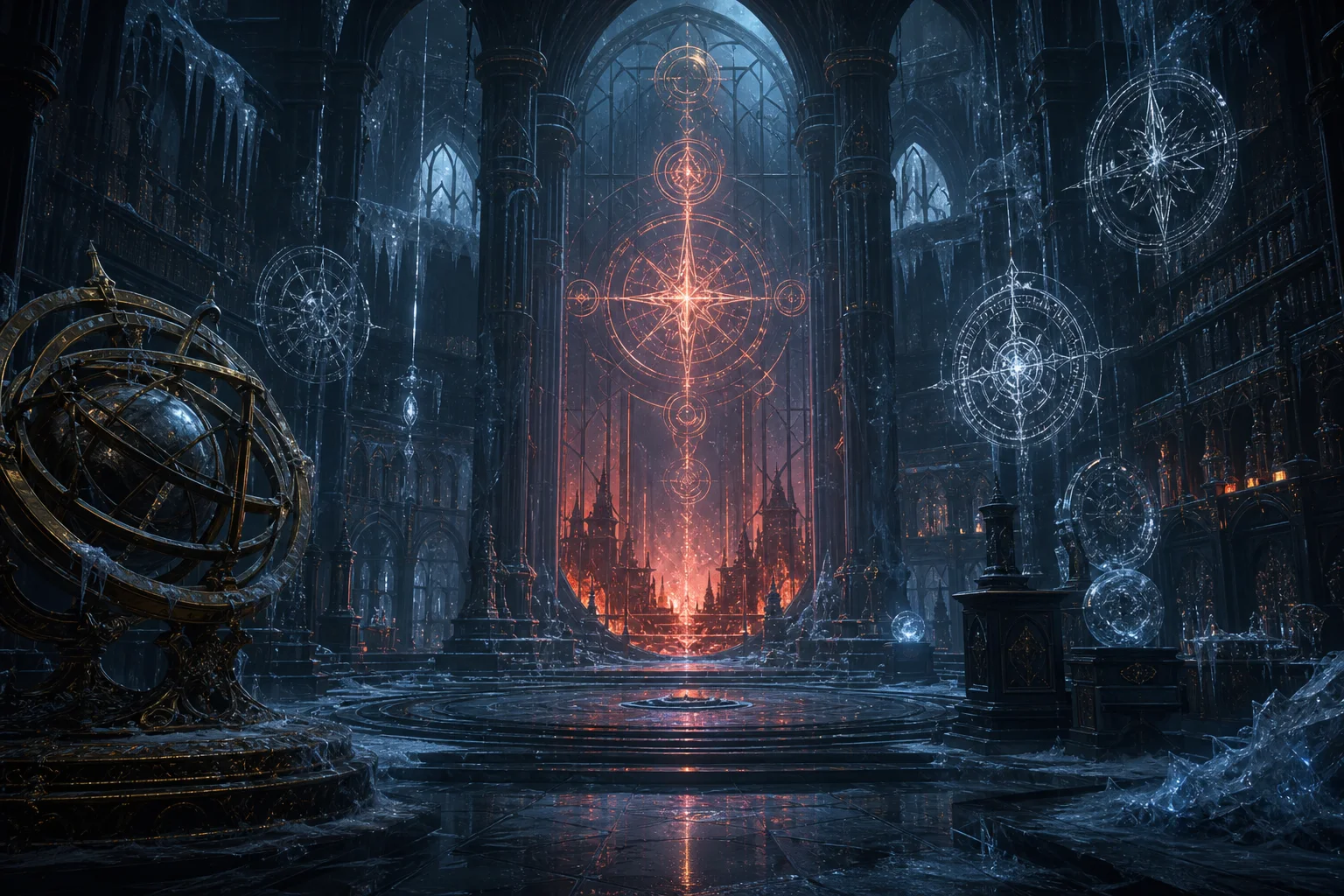
How Should a DM Use Mephistopheles Without Overdoing It?
A DM should use Mephistopheles through pressure, bargains, proxies, and delayed consequences before using him as a direct boss fight. In my games, archdevils work best when the party feels their influence several sessions before seeing the name on a handout.
- Start with the offer. A spell, cure, resurrection, title, or battlefield advantage arrives with one sentence of fine print.
- Make the price non-obvious. Do not ask for "your soul" immediately. Ask for a memory, a future favor, the right to define one word in a contract, or a harmless-looking signature.
- Use cold imagery, not just fire. Cania should feel precise, silent, and hostile.
- Let agents fail upward. A cultist, chain devil, imp lawyer, or ambitious mage can lose a fight and still advance the contract.
- Keep the rules readable. If the bargain is too vague, players feel tricked by the DM. If it is clear but painful, players blame the devil.
The video linked at the bottom is useful as a companion because it pushes the same idea: Mephistopheles is more interesting as a scheme than as a stat block. I used that lens here. Build the situation first, then decide whether dice are needed.
Mephistopheles vs Other Archdevils
Mephistopheles stands out because he feels like a magical researcher and contract predator, not only a ruler with armies. That makes him especially good for Wizard, Warlock, and forbidden-knowledge plots.
| Archdevil angle | How it feels at the table | When to choose Mephistopheles instead |
|---|---|---|
| Asmodeus | Supreme law, cosmic tyranny, final authority. | Choose Mephistopheles when the plot is about ambition under the throne, not the throne itself. |
| Dispater | Paranoia, iron defenses, impossible surveillance. | Choose Mephistopheles when the enemy is experimenting, bargaining, and tempting mages. |
| Levistus | Imprisonment, betrayal, frozen desperation. | Choose Mephistopheles when the ice is a laboratory, not a prison. |
| Zariel | War, conquest, rage, martial corruption. | Choose Mephistopheles when the corruption happens in a contract clause before the battle starts. |
This comparison is where many lore pages lose practical value. The useful DM question is not "which archdevil is strongest?" It is which archdevil makes this adventure easier to run and easier for players to understand.
Can a Player Character Be Connected to Mephistopheles?
Yes, a player character can be connected to Mephistopheles through a Fiend Warlock pact, infernal ancestry, a family bargain, or a legacy tiefling concept. If your table uses older tiefling variants, Mephistopheles flavor often leans into Intelligence and fire magic. If your table is using the current 2024 species framing, start from the official D&D Beyond Tiefling page and treat the exact ancestor as story flavor.
My preference is to keep the character playable and keep the archdevil distant. A level 3 Warlock should not have Mephistopheles calling every long rest. A better rhythm is one clear mark, one recurring emissary, and one debt the player understands.
- Warlock pact: the character receives power through a chain of intermediaries, not a casual direct friendship.
- Tiefling ancestry: make the Cania connection visible through cold breath, ember-blue eyes, or contract-themed dreams.
- Wizard temptation: offer research that solves one problem while opening a worse one.
- Paladin conflict: create a vow that can save people only if the character accepts infernal procedure.
If the player mostly wants mechanics, point them to the DND classes guide first. If they want table drama, Mephistopheles can carry that drama, but the player and DM should agree on boundaries before the pact becomes a campaign tax.
Mephistopheles Tiefling vs Mephistopheles the Archdevil
A Mephistopheles tiefling is a character ancestry flavor, while Mephistopheles the archdevil is the infernal power behind that flavor. Mixing those up is one reason this keyword gets messy.
| Search intent | What the user probably wants | Practical answer |
|---|---|---|
| Mephistopheles archdevil | Lore, Cania, patron ideas, villain use. | Use the archdevil as a distant power, not a normal NPC who appears every session. |
| Mephistopheles tiefling | Character ancestry, spell flavor, fire-and-ice theme. | Use the official tiefling rules your table allows, then make Mephistopheles the family source or infernal mark. |
| Warlock patron | Fiend pact roleplay and obligations. | Make the pact specific: one agent, one written debt, one visible benefit. |
| BG3-style tiefling curiosity | Why the name appears in character creation or ancestry discussions. | Explain the Cania/archdevil link, but do not assume video game options match your tabletop rules exactly. |
The cleanest wording for a character sheet is this: "My tiefling bloodline is marked by Mephistopheles, but the table uses our normal tiefling rules." That keeps the lore strong without sneaking in unsupported mechanics.
Should Mephistopheles Have a Stat Block in Your Campaign?
Most campaigns should not need a Mephistopheles stat block unless the party is playing at endgame scale. The faster, cleaner option is to run agents, avatars, lair effects, legal traps, and magical consequences.
| If you searched for... | Fast answer | What I would run |
|---|---|---|
| Mephistopheles stat block | Use only a source your DM approves, because archdevil statistics vary by edition, book, and third-party conversion. | A campaign boss, not a random encounter. |
| Mephistopheles 5e | You probably want either a 5e-compatible boss profile or a 5e lore hook. | An avatar with clear objectives and fewer moving parts. |
| Mephistopheles CR | Confirm the exact stat source before planning balance. Do not build encounter math from an unsourced number. | A proxy villain whose defeat changes the contract, not the entire cosmology. |
When I need him to affect the map, I use one of these tools instead of dropping the real archdevil onto a normal battle grid:
- Avatar encounter: a partial projection with one goal, one timer, and a way to break the link.
- Contract hazard: every round, a signed clause changes the battlefield until the party destroys the document or wins a skill challenge.
- Proxy villain: an ice-court magistrate, hellfire mage, or erinyes negotiator carries his authority.
- Cania weather: cold damage, difficult terrain, brittle cover, and flame that burns blue instead of orange.
- Debt clock: the party can win the fight but still move one step closer to repayment.
That approach gives you more playable sessions. A godlike villain who only punches is easy to flatten. A villain who edits the terms of victory is harder to forget.
How I Would Build a Mephistopheles Session
I would build a Mephistopheles session around a bargain that solves the party's urgent problem while making the next problem colder, smaller, and more personal. The trick is to make the deal useful enough that smart players consider it.
- Open with a practical problem. The party needs a name, cure, resurrection, location, safe passage, or spell component.
- Send an agent, not the archdevil. A polite emissary in a frost-rimmed room feels better than a surprise final boss.
- Put the bargain in plain language. The visible cost should be real. The hidden cost should be discoverable.
- Add one impossible temperature cue. Ink freezes, candles burn blue, or metal becomes too cold to hold.
- Let refusal matter. Saying no should make the adventure harder, not impossible.
- Make acceptance change the campaign state. A new mark appears, a rival notices, or a future promise becomes enforceable.
At the table, I would keep the handout short. Two clauses, one signature line, one weird witness. Long legal props are fun to write but slow to play.
VTT Token Notes for Mephistopheles and His Agents
A Mephistopheles VTT token should read as infernal authority at 512 px, not as a pile of red effects. In Token Maker, I would use a controlled palette: black glass, cold blue highlights, gold contract lines, and one sharp ember color.
- For Mephistopheles: keep the face readable and put the magic in the border or sigil.
- For Cania agents: use ice-blue rim light so they do not look like generic devils.
- For contract NPCs: add paper, wax, chain, or quill motifs instead of more flames.
- For combat scenes: test important rolls in the D&D dice roller if you need quick public results.
Mephistopheles DND FAQ
Who is Mephistopheles in DND?
Mephistopheles is an archdevil connected to Cania, the Nine Hells, arcane ambition, and hellfire. Use him as a patron or endgame threat, not as a casual monster encounter.
Is Mephistopheles a god in D&D?
Mephistopheles is usually treated as an archdevil rather than a normal god. For campaign purposes, that still makes him powerful enough to shape plots through contracts, cults, and infernal magic.
Can a Warlock have Mephistopheles as a patron?
Yes. A Fiend Warlock can use Mephistopheles as patron flavor if the DM agrees. I recommend using intermediaries and written obligations so the pact stays playable.
What layer of Hell is Mephistopheles tied to?
Mephistopheles is tied to Cania, commonly presented as the icy eighth layer of the Nine Hells. That cold setting is a big part of what separates him from generic fire-devil imagery.
Is Mephistopheles good for a beginner campaign?
Not as the main villain. For beginners, use one agent, one simple bargain, and one visible consequence. Save the full archdevil plot for a campaign that can handle infernal politics.
Watch the Mephistopheles D&D Lore Video
This Mephistopheles D&D video works best after you already have the campaign structure in mind. Use it to lock in the mood: the cold court, the dangerous bargain, and the feeling that this villain can win before initiative is rolled.
- Cold authority: the article leans into Cania and frozen pressure instead of generic fire-devil imagery.
- Contracts before combat: the strongest Mephistopheles scene should threaten the party through terms, not only damage.
- Table usability: turn that mood into encounter, patron, and token decisions instead of stopping at lore trivia.