
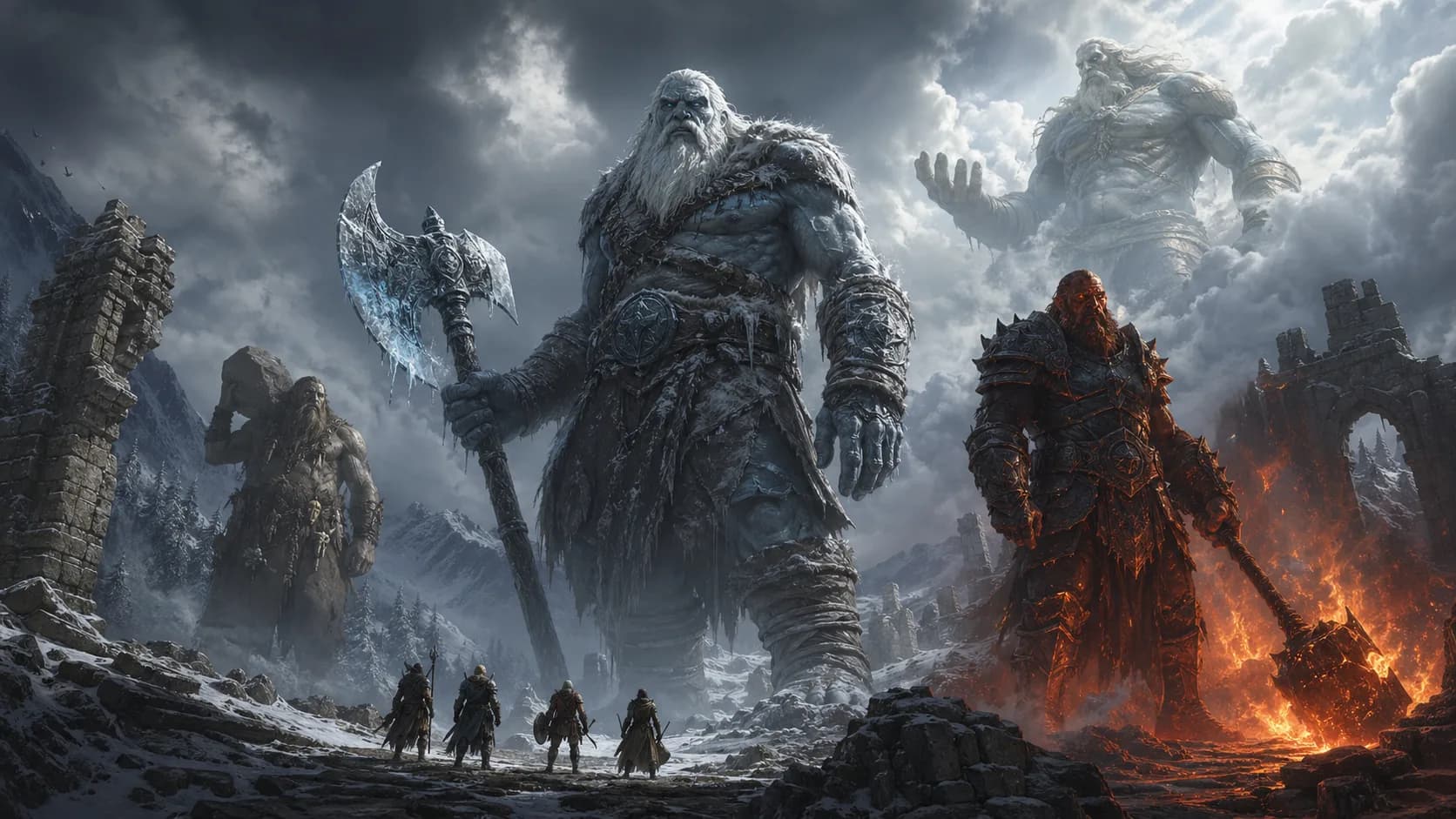
When you are preparing dnd giants, the most useful starting point is usually practical: which giants exist, how dangerous they feel at the table, and how to run them without turning combat into a slow bag of hit points. This guide gives you the quick table up front, then moves into encounter use, lore, VTT token advice, and a video follow-up.
Short version: dnd giants work best when you treat them as terrain-changing bosses, not oversized humanoids. The fun comes from thrown rocks, reach, social rank, huge environments, and the panic players feel when the battlefield itself stops feeling human-sized.
| Giant type | Fast table identity | Best encounter use |
|---|---|---|
| Hill giant | Brutal, hungry, simple, physically overwhelming | Low-complexity boss, village threat, early giant arc |
| Stone giant | Quiet, artistic, cave-dwelling, rock-throwing specialist | Canyon ambush, underground guardian, vertical map fight |
| Frost giant | Raider culture, cold brutality, martial pride | Warband leader, frozen fortress, survival pressure |
| Fire giant | Militarized smith, armor, discipline, siege energy | Forge dungeon, fortress assault, organized heavy infantry |
| Cloud giant | Wealthy, magical, political, morally flexible | Social intrigue, flying castle, high-status patron or villain |
| Storm giant | Ancient, prophetic, oceanic, near-mythic | Late-campaign ally, world-shaking omen, legendary boss |
Page type note: this is an encyclopedia-style guide for dnd giants. That is why the reference table comes before the lore essay.
What Are DND Giants?
DND giants are Huge humanoid monsters in Dungeons & Dragons, usually organized into distinct types such as hill, stone, frost, fire, cloud, and storm giants.
The official rules give each giant type its own stat block, combat rhythm, and flavor. For rules lookup, start with the D&D Basic Rules monster stat blocks on D&D Beyond. For broader publication history, the Dungeons & Dragons giant overview on Wikipedia is useful background.
In actual play, I do not think of giants as "big orcs." That makes them flat. I think of dnd giants as walking encounter architecture: they change cover, distance, doors, bridges, ceilings, food supplies, and negotiation stakes.
DND Giants Quick Ranking by Table Feel
The best dnd giants for your session depend less on raw challenge rating and more on what kind of pressure you want players to feel.
| Goal | Best giant pick | Why it works |
|---|---|---|
| Simple scary combat | Hill giant | Easy to run, easy to understand, instantly threatening to low-level parties. |
| Smart terrain fight | Stone giant | Rock throwing, caves, cliffs, and cover make the whole map matter. |
| Warband pressure | Frost giant | Feels like a raiding culture, not a random monster encounter. |
| Dungeon faction | Fire giant | Armor, craft, hierarchy, and forge spaces create a strong dungeon identity. |
| Social game | Cloud giant | They can bargain, lie, host, collect, threaten, and still crush the party. |
| Mythic scale | Storm giant | Best saved for prophecy, ancient grudges, sea storms, and late-game awe. |
How Strong Are DND Giants in 5e?
DND giants are dangerous because they combine huge damage, long reach, thrown rocks, and enough hit points to punish sloppy positioning.
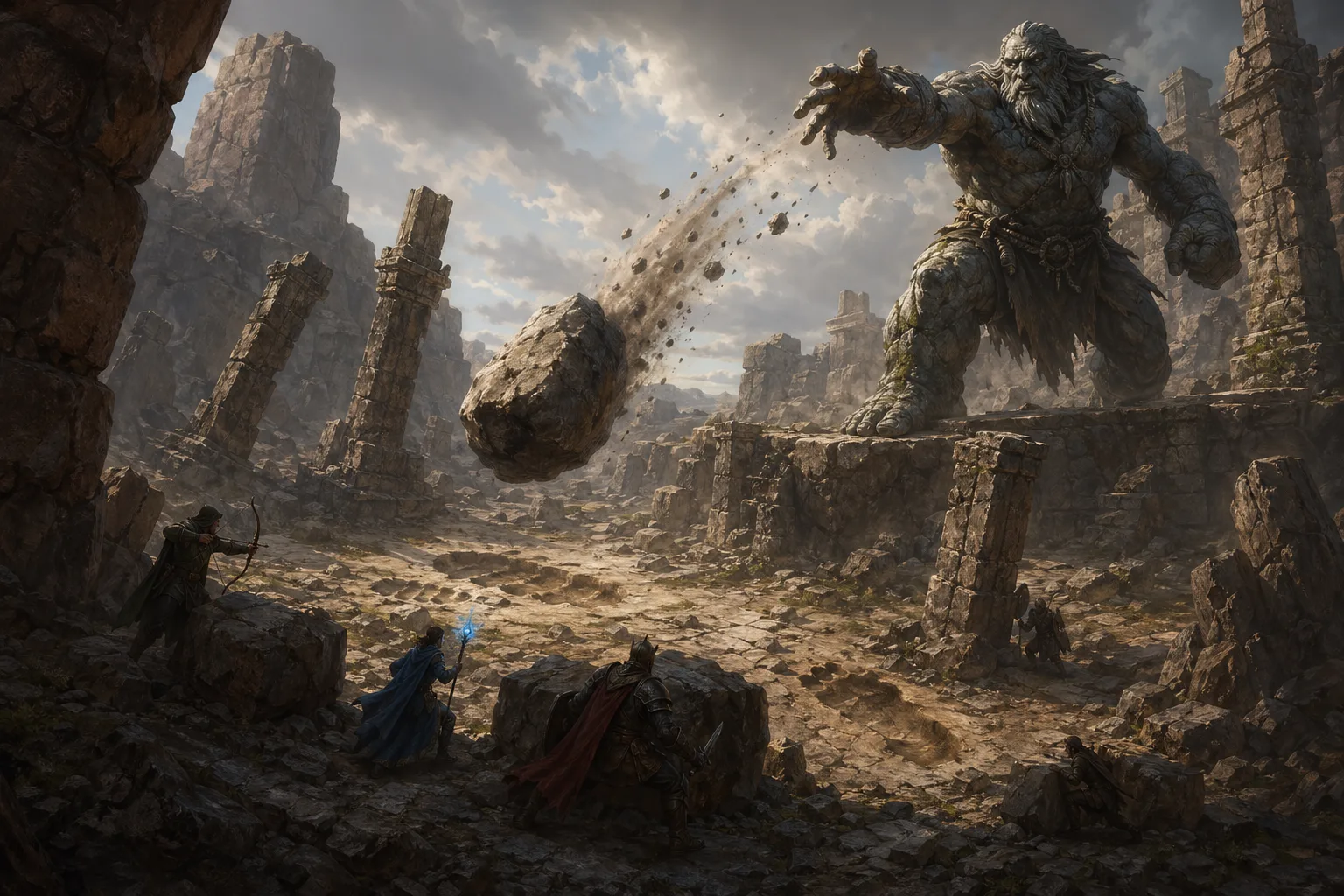
The trap is running them like stationary brutes. If a giant stands still and trades attacks, the fight becomes predictable. In our games, giants become memorable when they keep changing the physical problem: breaking stairs, throwing carts, knocking down trees, reaching over barricades, or forcing ranged characters to move.
- Reach matters: players who are used to normal melee spacing suddenly misjudge danger zones.
- Thrown rocks matter: backline characters are not automatically safe.
- Huge size matters: doors, bridges, ladders, and rooms stop being neutral scenery.
- Morale matters: intelligent giants should retreat, bargain, call allies, or use hostages when losing.
Best Ways to Use Each DND Giant Type
The easiest way to make dnd giants feel different is to give each type a different relationship to space, status, and violence.
Hill giants: make them simple, not stupid to run
Hill giants are best when the table immediately understands the threat. They are hungry, loud, destructive, and direct.
My favorite hill giant setup is not "one giant in a field." It is a farm road with panicking animals, smashed wagons, a collapsing barn, and a giant using anything nearby as a club. The monster is simple, but the scene is busy.
Stone giants: use height, darkness, and thrown rocks
Stone giants should feel like the map belongs to them. Caves, cliffs, echoing chambers, and broken ledges make them much more interesting.
When I run stone giants, I mark two or three elevated rock positions before the fight starts. That one prep step makes their ranged pressure feel intentional instead of improvised.
Frost giants: make the raid feel organized
Frost giants are at their best when they arrive with a purpose. They are not just cold-themed bags of damage; they are raiders, trophy-takers, and leaders of brutal expeditions.
Give them scouts, a captured guide, sledges, winter wolves, or a visible prize they are trying to steal. Now the encounter has direction.
Fire giants: build the dungeon around craft and command
Fire giants work beautifully as fortress or forge villains. Their spaces should feel hot, industrial, guarded, and hard to approach quietly.
Use narrow gantries, chains, anvils, molten channels, alarm gongs, and disciplined patrols. A fire giant should make the party feel under-equipped and poorly dressed for the room.
Cloud giants: turn them into patrons, rivals, or social threats
Cloud giants are the best dnd giants for players who like negotiation. They can be vain, generous, cruel, curious, or all four before breakfast.
A cloud giant encounter does not need to start with initiative. A dinner invitation in a floating palace can be more frightening than a surprise attack, because the party knows the host could kill them but keeps smiling.
Storm giants: save them for awe
Storm giants lose impact if they show up as ordinary random encounters. They are better as oracles, ancient rulers, oceanic powers, or the last person who remembers why a war began.
When I use a storm giant, I usually put the first clue before the giant appears: impossible lightning, a whale carcass carved with runes, a tide that arrives at the wrong hour, or sailors refusing to say a name out loud.
Encounter Design Checklist for DND Giants
A good dnd giants encounter needs scale cues, vertical choices, ranged pressure, and a reason the giant is there.
- Add three scale cues: giant doors, human-sized wreckage, massive footprints, oversized tools, or boulders stacked like ammunition.
- Give the giant a job: guarding, raiding, building, hunting, negotiating, searching, or punishing.
- Place cover deliberately: rocks and pillars should help players survive without making the giant helpless.
- Use forced movement sparingly: one shove into danger is exciting; repeated no-choice punishment gets old fast.
- Plan morale: decide before combat whether the giant fights to the death, flees, bargains, or calls a superior.
My Practical DM Rule
Before I put dnd giants on a map, I write one sentence: "What can this giant do to the room that a normal monster cannot?" If I cannot answer that, I redesign the encounter before touching the stat block.
DND Giants Lore: What Is the Ordning?
The Ordning is the traditional giant social hierarchy that ranks giant types and individuals by status, strength, craft, omens, wealth, or other values.
You do not need a lecture on giant politics to use it well. At the table, the Ordning is useful because it gives giants reasons to compete, obey, resent, and scheme. A hill giant may fear a frost giant. A fire giant may look down on both. A cloud giant may smile while quietly treating everyone like pieces in a private game.
The 2024 rules ecosystem keeps changing how players discover monsters and lore, so I would use the current D&D Beyond rules hub for present-day official material and your campaign book for setting-specific details.
How to Make DND Giants Tokens for VTT Play
A strong dnd giants token must read as huge at small size. The face matters, but silhouette and scale matter more.
For Roll20, Foundry, Owlbear Rodeo, or any virtual tabletop, I usually crop giant art less tightly than player portraits. Show shoulders, weapon, hand size, or a nearby scale object. If every token is just a face in a circle, the giant stops feeling huge.
- Use thicker borders: giant tokens often sit under spell effects and need to stay readable.
- Keep the weapon visible: axe, hammer, boulder, chain, or spear instantly tells players what danger to expect.
- Differentiate giant types by color: cold blues, forge reds, stone grays, cloud golds, storm blue-black accents.
- Export large boss tokens at 1024px: especially if you scale them up on a VTT grid.
- Make minion tokens simpler: ogres, wolves, cultists, or servants should not visually compete with the giant.
You can make those tokens in the Token Maker editor. If the encounter includes rock throws, fall damage, or concentration saves, keep the D&D dice roller open beside it. For party role coverage before a giant arc, the DND classes guide is a useful planning companion. For reaction timing at a caster-heavy table, see the dnd counterspell guide.
Common Mistakes With DND Giants
The most common mistake with dnd giants is making them physically big but tactically small.
- Mistake 1: using an empty map where the giant only walks forward and attacks.
- Mistake 2: forgetting thrown rocks, reach, cover destruction, and morale.
- Mistake 3: running every giant type with the same personality.
- Mistake 4: placing low-level characters in a no-cover arena against rock-throwing giants.
- Mistake 5: treating giant lore as trivia instead of using it to create conflict.
Video: DND Giants Companion Watch
The companion video is available on YouTube here. I use it as a tone companion rather than a replacement for rules text: watch for the way giants are framed as scale, personality, and table spectacle. That is the right lens for building better dnd giants encounters.
FAQ About DND Giants
What are the main DND giants?
The main dnd giants most players recognize are hill giants, stone giants, frost giants, fire giants, cloud giants, and storm giants.
Are DND giants humanoids?
In 5e, many classic dnd giants are Huge giants rather than ordinary humanoids. Always check the exact stat block your table is using.
Which DND giant is best for a first giant encounter?
A hill giant is usually the easiest first choice because its threat is clear and its tactics are simple. A stone giant is better if you want a more tactical terrain fight.
How do you make DND giants feel bigger in combat?
Use scale cues, vertical terrain, thrown objects, destructible cover, and objectives beyond damage. A giant should change the room, not just occupy more squares.